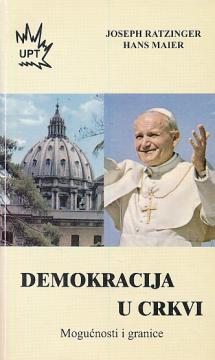
Demokracija u Crkvi
The essay analyzes the nature and structure of the Church in relation to democratic models. Ratzinger emphasizes that the Church is not a human invention or a parliament, but a community founded on faith, Truth, and God's revelation.
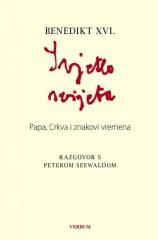
"Democracy in the Church" (originally published as part of a larger theological treatise and reflection on ecclesiology) is an influential work by Joseph Ratzinger, later Pope Benedict XVI, in which the author grapples with the question of the application of modern political models to the internal organization and life of the Catholic Church. Ratzinger presents a clear and precise theological analysis, opposing the tendency to transform the Church into a parliamentary structure in which the truths of faith are decided by majority vote. The main idea of the work is that the Church is not by its nature a democracy because its foundation lies not in the will of the citizens or political compromise, but in God's revelation and Jesus Christ. The author explains that subjecting faith and moral principles to majority decision-making would lead to the replacement of the Word of God with human opinion, thereby causing the Church to lose its identity and salvific mission. Faith, according to Ratzinger, is not the product of human agreement, but a gift that is received and preserved. However, Ratzinger does not reject democracy as a political system in society, but rather emphasizes the limits of its application within the spiritual community. He calls for a deeply co-responsible participation of all believers in the life of the Church, but through service, dialogue, and communion in the Truth. The work is an extremely topical and stimulating read for understanding the nature of the Church and the challenges it faces in the contemporary world.
One copy is available