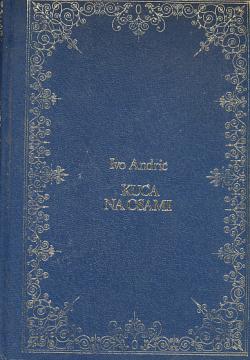
Kuća na osami

A posthumously published collection of short stories by Ivo Andrić, in which the writer—amidst the solitude of Sarajevo’s Alifakovac—evokes and brings to life the extraordinary destinies of passersby, eccentrics, and tragic figures from Bosnia’s past.
The short story collection The House in Isolation (Kuća na osami) by Ivo Andrić, published posthumously in 1976 (a year after the author's death), stands as one of the Nobel laureate’s most intimate and stylistically refined works. The collection’s framing narrative is set in an old house on the Alifakovac hill in Sarajevo. From this vantage point of solitude and observation, the narrator silently summons figures from the past; they appear before him like ghosts, seeking to have their fragmented, tragic, and suppressed destinies told. Through a series of portraits—featuring characters such as Ali-Pasha, Bonval-Pasha, Geza the Gypsy, Baron Gautsch, and various other marginalized figures or historical personages—Andrić once again demonstrates his masterful ability to delve into the human psyche. Each character bears their own inner drama, a sense of social alienation, and the disparity between their desires and a harsh reality. The House in Isolation also serves as Andrić’s poetic testament. In it, the author reflects on the very nature of literary creation, the relationship between the writer and his characters, and the power of memory to rescue the individual from oblivion. Written in a distinctive, calm, and reflective style, this work rounds out Andrić’s rich body of narrative fiction.
One copy is available