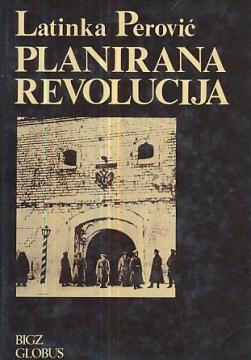
Latinka Perović bila je tajnik Centralnog komiteta Saveza komunista Srbije od 1969. do 1972. godine, kada je s tog položaja zajedno s Markom Nikezićem i suradnicima smjenjena pod optužbom za anarho-liberalizam.
Dnevničko svjedočanstvo časnika s istočnog fronta i iz Berlina 1945.: raspad zapovijedanja, kaos obrane, iluzije i stvarnost zadnjih dana Trećeg Reicha, ispričano hladno, precizno, iz prve ruke.
Društvo novinara NR Hrvatske, 1952.
Croatian. Latin alphabet. Paperback.
11.24 €
Sociology • World War II • Croatian history • Yugoslavia • Communism and fascism • 20th Century
The book analyzes how conflicting historical narratives about the suffering and mass emigration of Italians from Istria and Rijeka developed in Croatia and Italy after World War II (1943–1956), debunking myths and encouraging an empathetic approach to the
Srednja Europa, 2010.
Croatian. Latin alphabet. Paperback.
11.32 €
Communism and fascism • History of Europe • History of ideas • 20th Century • Biography • Political-historical essays
Roj Medvedev's book is a collection of biographical portraits of six key collaborators of Joseph Stalin: Vyacheslav Molotov, Lazar Kaganovich, Anastasij Mikoyan, Kliment Voroshilov, Georgi Maljenkov and Mikhail Suslov.
Svjetlost, 1987.
Croatian. Latin alphabet. Hardcover.
11.349.07 €
Marketing and propaganda • Communism and fascism • Political journalism
"God's Land Nippon" by Friedrich K. Haider and Slavko Pavičić is an educational book about Japan, its culture, history, customs and spirituality during World War II. Popular propaganda reading for the NDH.
Nakladna knjižara Velebit, 1942.
Croatian. Latin alphabet. Paperback.
14.72 €
Autobiographies and Memoirs • Communism and fascism • Political-historical essays
Telling the Story of a Generation is a memoir trilogy by Rodoljub Čolaković that follows the path of Yugoslav communists between the two world wars, from emigration to the eve of World War II, through personal experience.
Naprijed, 1968.
Croatian. Latin alphabet. Hardcover with dust jacket.
Josip Mihaljević's book analyzes the relationship between the government and the individual in communist Croatia (1958–1972), through repressive mechanisms, ideological pressures, and restrictions on personal freedom in the socialist system.