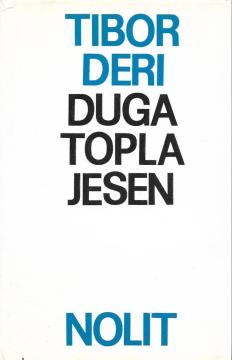
Duga topla jesen
Tibor Déry's Long Warm Autumn is an intimate novel about old age, dealing with the inexorable decay of body and spirit, and the last attempts to escape from inevitable death.
Long Warm Autumn is a late work of the Hungarian classicist Tibor Déry, written in the last years of his life. The novel belongs to the author's meditative, intimate texts in which he deals with the themes of old age, transience and facing the end.
The story follows an elderly intellectual who is experiencing the "long warm autumn" of life - a period in which the body weakens, memories come alive, and the awareness of mortality becomes more and more present. With great sincerity and lyrical power, Déry describes physical decay, loneliness, nostalgia for the past and the small daily rituals with which the old man tries to maintain dignity and meaning.
The work is universal: although set in the Hungarian context, it speaks of an experience that we all have to go through. The author interweaves memories of youth, love, revolutions and personal dramas with the present dominated by diseases, restrictions and awareness of limited time. "Long warm autumn" becomes a metaphor for the last stage of life - still beautiful, but already colored with autumn tones and the foreboding of winter.
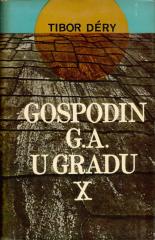
Stylistically, the novel is mature and refined – Déry's language is rich, introspective and poetic, with an emphasis on inner monologue and subtle details. As in other late works (e.g. Mr. G.A. in town X), here one can feel the wisdom of a man who lived through the turbulent 20th century – wars, revolutions, imprisonment and ideological ruptures – and now faces the most personal challenge: his own aging and death.
One copy is available
- A message of a personal nature