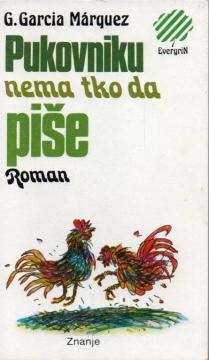
Pukovniku nema tko da piše

Pukovniku nema tko da piše

Gabriel Garcia Marquez

The Colonel Has No One to Write to by Gabriel García Márquez is a story about an old colonel who has been waiting for years for his promised state pension. In poverty and uncertainty, he refuses to lose hope.

Nobody to Write to the Colonel is one of the most famous short works by Colombian writer Gabriel García Márquez. The story takes place in a small Caribbean town during a period of political repression following the civil conflict in Colombia.

The main character is an elderly colonel, a veteran of one of the civil wars, who has been going to the dock every Friday for fifteen years waiting for a letter from the government. The state promised him a military pension for his participation in the war, but the letter never arrives. Despite this, the colonel stubbornly believes that justice will be served one day.

He lives with his wife, who suffers from asthma. Both are very poor and gradually sell almost everything they own to survive. Their only valuable possession is a fighting cock, inherited from their son Agustín. The son was killed for his political activities, and the cock is the last memory of him. While his wife wants to sell the animal to raise money for food and medicine, the colonel believes that the rooster's victory in the upcoming fights could change their fate.

The novel depicts a series of everyday situations: visits to the post office, conversations with neighbors, attempts to buy food on credit, and the constant struggle with poverty. Although almost nothing happens on the outside, internal tension grows through the conflict between hope and despair. The colonel refuses to accept defeat and remains true to his own dignity even when faced with hunger.

The work explores themes of waiting, injustice, political repression, and human perseverance. The final scene, in which the colonel answers the question of what he will eat with determination and defiance, is considered one of the most memorable in Latin American literature. The novel is a powerful portrayal of a man who, despite everything, refuses to lose faith in the future.

Original title
El Coronel No Tiene Quien Le Escriba
Translation
Milivoj Telećan
Editor
Zlatko Crnković
Dimensions
19.5 x 11.5 cm
Pages
108
Publisher
Znanje, Zagreb, 1982.
 
Latin alphabet. Paperback.
Language: Croatian.

One copy is available

Condition:Used, excellent condition
 

Are you interested in another book? You can search the offer using our search engine or browse books by category.

You may also be interested in these titles

Neverovatna i tužna istorija nevine Erndire i njene bezdušne babe: sedam priča

Neverovatna i tužna istorija nevine Erndire i njene bezdušne babe: sedam priča

Gabriel Garcia Marquez
Dečje novine, 1979.
Croatian. Latin alphabet. Paperback.
2.99
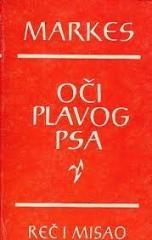
Oči plavog psa

Oči plavog psa

Gabriel Garcia Marquez
Izdavačko preduzeće "Rad", 1979.
Serbian. Latin alphabet. Paperback.
3.98
Hitar kao žudnja

Hitar kao žudnja

Laura Esquivel

This sensual and emotional story explores the complex relationships of love, communication, and family ties through the life story of Júbilo, a man gifted with the exceptional gift of understanding and conveying emotions.

Algoritam, 2005.
Croatian. Latin alphabet. Paperback.
3.24
Pukovniku nema tko da piše

Pukovniku nema tko da piše

Gabriel Garcia Marquez

The Colonel Has No One to Write to by Gabriel García Márquez is a story about an old colonel who has been waiting for years for his promised state pension. In poverty and uncertainty, he refuses to lose hope.

Znanje, 1979.
Croatian. Latin alphabet. Hardcover with dust jacket.
5.243.95 - 5.265.24
Eva Luna

Eva Luna

Isabel Allende

Eva Luna is a novel about a poor storyteller who weaves lives with words, written by Isabel Allende, the founder of Latin American magical realism. Published after the success of The House of the Spirits, this whirlwind of adventure combines love, revolut

Znanje, 1990.
Croatian. Latin alphabet. Hardcover with dust jacket.
8.36
Gađenje: Tomas Bernhard u San Salvadoru

Gađenje: Tomas Bernhard u San Salvadoru

Horacio Castellanos Moya

The story of the book is more than simple: due to the death of his mother, the main character, Vega, comes from Canada to Salvador. After the funeral and property division, he meets his old friend, Moya, one of the few people with whom Vega can talk norma

Puna kuća, 2005.
Serbian. Latin alphabet. Paperback.
7.36