Titovim putem 1945.
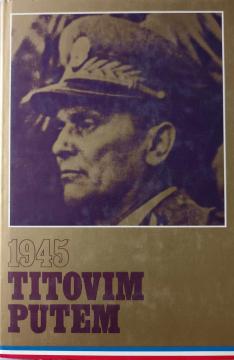
Zvonko Štaubringer’s book "Along Tito’s Path in 1945" documents the dramatic events at the end of the Second World War, the liberation of the country, and the pivotal role of Josip Broz Tito in building the new Yugoslavia.
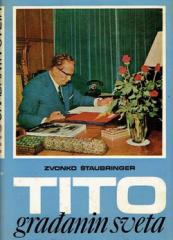
The historical and non-fiction work Titovim putem 1945. ("Along Tito’s Path in 1945"), authored by the prolific journalist and writer Zvonko Štaubringer, is dedicated to one of the most fateful years in the modern history of this region. The book focuses on 1945—a period marked by the final collapse of fascism, the liberation of the country, the conclusion of the National Liberation Struggle (NOB), and the laying of the foundations for a new federal state—with Josip Broz Tito emerging as the central figure in both the military victory and the political transformation of society. Through documentary records, personal testimonies, speeches, and analyses, Štaubringer reconstructs the pivotal steps by which Tito’s leadership guided the country from the devastation of war toward a process of reconstruction and development. The book traces the dramatic transition from the battlefields to the political arena, the establishment of people’s authority, the resolution of complex territorial and international issues (such as the status of Istria and Trieste), and the enthusiasm surrounding post-war reconstruction. The author writes in a distinctly affirmative tone—typical of Yugoslav non-fiction from that era—seeking to immortalize the revolutionary fervor and a vision of society rooted in the principles of "brotherhood and unity." The work serves as a valuable historical testament and a document illustrating how the collective memory of 1945 and Tito’s role was constructed within Yugoslav historiography and the public sphere.
Two copies are available
Copy number 2
- Library stamp