Ruka iz groba

Ruka iz groba

Karlo Štajner

Hand from the Grave (1985) by Karl Steiner, part of an autobiographical trilogy along with 7000 Days in Siberia and Return from the Gulag, is a collection of testimonies, interviews, and texts about the author, which delve into his experience of 20 years

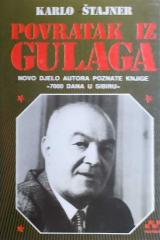
Published by the Blue Library edition, the book continues the story of the life of Štajner, an Austro-Croatian communist who was arrested in Moscow in 1936 on charges of being a Gestapo agent.

The book contains interviews with the author, answers to readers' questions, and testimonies of others about his fate, inspired by Krleža's description of Štajner as a "hand from the grave" - a symbol of the miraculous return from the Siberian hell. Štajner describes the brutality of the camp, the psychological struggle, and his faith in communist ideals, despite suffering. Through reflections on Stalinism, justice, and humanity, the book questions the nature of totalitarianism and resistance. Of particular note is his relationship with his wife Sonja, who waited for him loyally, and his rehabilitation in 1956 and return to Yugoslavia.

The book is a powerful document of survival, but also a testimony to the historical context and social interest in the gulags. Appreciated for its authenticity and emotional depth, The Hand from the Grave is a key work that completes Steiner's trilogy, offering insight into the personal and collective struggle against dehumanization.

Graphics design
Bronislav Fajon
Dimensions
24 x 16 cm
Pages
211
Publisher
Globus, Zagreb, 1986.
 
Latin alphabet. Hardcover with dust jacket.
Language: Croatian.

No copies available

The last copy was sold recently.
 

Are you interested in another book? You can search the offer using our search engine or browse books by category.

You may also be interested in these titles

Povratak iz Gulaga: Tajni referat Hruščova

Povratak iz Gulaga: Tajni referat Hruščova

Karlo Štajner

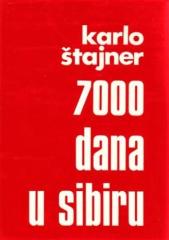
A sequel to his memoir 7000 Days in Siberia, in which he describes his twenty-year imprisonment in Soviet gulags. The book delves into his experiences in the camps, providing additional insights into Steiner's life and reflections on communist ideals.

Globus, 1986.
Croatian. Latin alphabet. Hardcover with dust jacket.
10.768.07 - 11.24
Pazin

Pazin

Petar Strčić

Pazin is a town in central Istria, known for its rich history and natural beauty. It is located above the karst abyss of Pazinska jama, into which the river Pazinčica plunges.

Skupština općine Pazin, 1982.
Croatian. Latin alphabet. Hardcover with dust jacket.
15.62
Bošković – kalendar Hrvatskog prirodoslovnog društva

Bošković – kalendar Hrvatskog prirodoslovnog društva

Calendar dedicated to Ruđer Josip Bošković on the occasion of the 200th anniversary of his birth. Published in 1919 in Zagreb, the calendar provides an overview of Bošković's life and work, emphasizing his role in mathematics, astronomy, physics and philo

Hrvatsko prirodoslovno društvo, 1919.
Croatian. Latin alphabet. Paperback.
7.465.60
Vodič kroz grad Osijek

Vodič kroz grad Osijek

An important document reflecting the state of the city immediately after World War II. The guide served as a practical tool for orientation and informing citizens and visitors about the urban layout and infrastructure of the city at that time.

Gradski N. O., Građevinski odjel u Osijeku, 1946.
Croatian. Latin alphabet. Paperback.
64.28
Zagreb tisuću devetsto četrdeset prve

Zagreb tisuću devetsto četrdeset prve

Ivan Šibl

"Zagreb one thousand nine hundred and forty-first" is not only a historical overview of events, but at the same time it is also a book in which the author vividly and directly outlined dozens of portraits. A book that is at the same time a historiographic

Naprijed, 1967.
Croatian. Latin alphabet. Hardcover with dust jacket.
7.98
Hrvatski vladari 1-5.

Hrvatski vladari 1-5.

Neven Budak
Večernji list, 2012.
Croatian. Latin alphabet. Paperback.
The book consists of 5 volumes
12.34 - 15.32