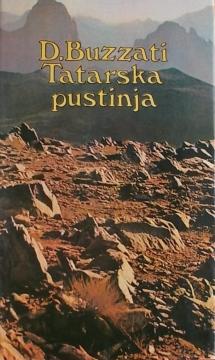
Tatarska pustinja

Tatarska pustinja

Dino Buzzati

The novel The Tartar Desert gains its full meaning only when it is interpreted as a reflection on the fundamental meaning of life and human history.

Dino Buzzati's novel The Tartar Desert could be interpreted as a kind of echo of the so-called literature of the absurd, if everything in it were not already too normal. It is a story about a man who, faced with the meaninglessness of the world and life in it, overcomes this problem very simply, almost imperceptibly, by submitting to the absurdity of his life situation without many questions, no longer placing any demands on his life. This deprives him of a basic human trait: resistance to meaninglessness and the struggle for the content of his own life.

The hero of this book, a young officer, is eagerly awaiting his first duty after military school. He has been assigned to a mysterious fortress on the edge of the desert from which an enemy invasion once came: once, but never again. However, according to military logic, danger is always possible on that desert border. Our hero gradually adapts to his living environment to the point that life without the fortress and its false purpose becomes unimaginable to him. After a few years, he returns to his hometown for a short vacation. This challenges him to think about how to continue his life.

Original title
Il Deserto dei Tartari
Translation
Jerka Belan
Editor
Mate Zorić
Graphics design
Alfred Pal
Dimensions
21.5 x 12.5 cm
Pages
224
Publisher
Sveučilišna naklada Liber (SNL), Zagreb, 1982.
 
Latin alphabet. Hardcover with dust jacket.
Language: Croatian.

One copy is available

Condition:Used, very good condition
Damages or inconvenience notice:
  • The cover is missing
 

Are you interested in another book? You can search the offer using our search engine or browse books by category.

You may also be interested in these titles

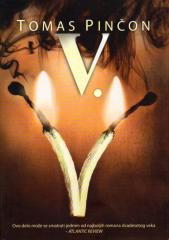
V.

V.

Thomas Pynchon

The novel represents a journey into an alternative world – a world that we all belong to from time to time, but of which we would not want to be a part, a world of paranoia and alienation that we are not entirely sure is just an alternative or the bare tr

Čarobna knjiga, 2010.
Serbian. Latin alphabet. Paperback.
21.98
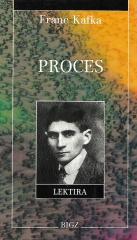
Proces

Proces

Franz Kafka

Kafka wrote The Process between 1914 and 1915, published posthumously in 1925. The novel is unfinished but with an added final chapter by Max Brod. Edition with a foreword by B. Živojinović and an afterword by Walter Killi.

BIGZ, 1990.
Serbian. Latin alphabet. Paperback.
4.26
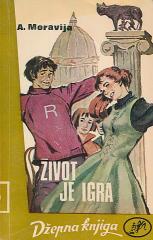
Život je igra

Život je igra

Alberto Moravia

The book consists of several stories that explore the complexity of human behavior, often through an ironic and satirical depiction of everyday life.

Svjetlost, 1965.
Serbian. Latin alphabet. Paperback.
3.46 - 3.72
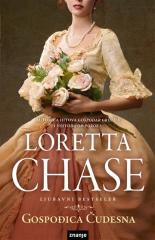
Gospođica čudesna

Gospođica čudesna

Loretta Chase

The first in the Carsington Brothers series, it is a Regency romance set in Derbyshire in the 1820s. Loretta Chase, a master of witty love stories, combines humor, suspense, and deep characters in a tale of the conflict between duty and heart.

Znanje, 2017.
Croatian. Latin alphabet. Paperback.
3.72 - 3.74
Zagrepčanka

Zagrepčanka

Branislav Glumac

Branislav Glumac published a novel without periods or commas in 1974, as the relentless stream of thought of a young rebel. Published in socialist Yugoslavia, the work caused a scandal with its openness and became a classic about generational rebellion.

IROS, 1986.
Croatian. Latin alphabet. Hardcover.
8.24
Shannonov put

Shannonov put

Archibald Joseph Cronin

Cronin's moving story of redemption. Robert Shannon, a fanatical doctor-researcher, sacrifices love and life for science, but in the end loses everything – his girlfriend, recognition, health – only to realize through suffering: medicine without humanity

Otokar Keršovani, 1966.
Croatian. Latin alphabet. Hardcover with dust jacket.
6.24