
Rakova obratnica

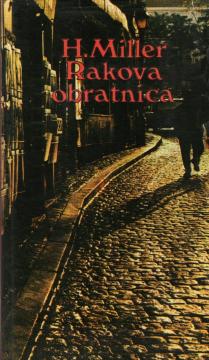
Rakova obratnica

Henry Miller

This is an accusation, a slander, a personal insult. This is not a book, in the ordinary sense of the word. No, this is a continuous insult, a spit in the face of Art, a foot in the tur against God, Man, Fate, Time, Love, Beauty...whatever you want.

From a seemingly marginal literary phenomenon that even physically appears outside the motherland – in the notorious Obelisk publishing house in Paris – the forty-year-old and self-taught author publishes his first, shocking, quasi-autobiographical novel. Thus, from an outsider excess of limited scope, from an anarchic, "asocial", individualistic, scandalous gesture that appears at a time when the main fashion of Western literary life is "social literature", Tropic of Cancer gradually but surely moved towards a central position in the motherland, American literature, entered the literary tradition as one of the main heirs and transmitters of the legitimate traditional current from Thoreau and Whitman to the Beats and Norman Mailer. So, although we may not agree with the American poet Karl Shapiro who called Miller "the greatest living author" in 1960, nor with Mailer himself who called him a "genius" and only slightly less a Dostoevsky, today we certainly see quite clearly that this is a writer who has had a liberating influence on our era more than anyone else, and thus far surpassed the boundaries of his own literature... He, to expand Mailer's image, is moving away hair by hair from the "Great Muff of Knowledge".

Original title
The Tropic of Cancer
Translation
Antun Šoljan
Editor
Nikica Petrak
Graphics design
Alfred Pal
Dimensions
21 x 12.5 cm
Pages
232
Publisher
Sveučilišna naklada Liber (SNL), Zagreb, 1981.
 
Latin alphabet. Hardcover with dust jacket.
Language: Croatian.

One copy is available

Condition:Used, very good condition
Damages or inconvenience notice:
  • Slight damage to the dust jacket

 

Are you interested in another book? You can search the offer using our search engine or browse books by category.

You may also be interested in these titles

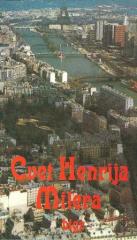
Cvet Henrija Milera

Cvet Henrija Milera

Henry Miller

The book Flower by Henry Miller is based on a selection from the best and most attractive works of this writer, following the chronological sequence in Miller's writing, giving Miller's most artistically mature pages.

BIGZ, 1988.
Serbian. Latin alphabet. Paperback.
5.323.99
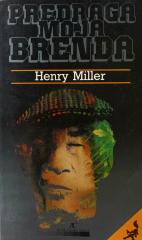
Predraga moja Brenda

Predraga moja Brenda

Henry Miller

Henry Miller's Love Letters to Brenda Venus. If you're looking for Miller's raw passion in a tender epilogue, this is an emotional glimpse into the heart of a rebel—touching, witty, and compelling.

August Cesarec, 1987.
Croatian. Latin alphabet. Paperback.
4.32
Pedeset riječi za kišu

Pedeset riječi za kišu

Asha Lemmie

Noriko Kamiza, of mixed blood (a Japanese aristocrat and an African-American soldier), is an outcast in post-war Kyoto. Hidden and abused because of her race, she struggles for identity, the love of her brother, and a place in a world that does not accept

Mozaik knjiga, 2022.
Croatian. Latin alphabet. Paperback.
10.46
Tarzan gospodar zvjeradi

Tarzan gospodar zvjeradi

Edgar Rice Burroughs

The third novel in the famous Tarzan series. Tarzan's enemies kidnap his son and Jane, leaving him trapped on a deserted island. With the help of beasts (apes, panthers, and lions), Tarzan takes revenge and saves his family.

St. Kugli, 1933.
Croatian. Latin alphabet. Hardcover.
9.44
Nomadi sjevera

Nomadi sjevera

James Oliver Curwood

"Nomads of the North" is an adventure work about the life of animals in the wilderness of northern Canada. Through the friendship of a dog and a bear cub, it depicts the struggle for survival, the power of nature, and life in harsh regions.

Naklada slavenske knjižare St. i M. Radić, 1925.
Croatian. Latin alphabet. Paperback.
7.32
Zlatni lanac

Zlatni lanac

Upton Sinclair

Upton Sinclair sharply criticizes the relationship between art and capital throughout history. He shows how money and power have always influenced literature, painting, and music, and how great artists were often prisoners of the "golden chain."

Biblioteka savremenih pisaca, 1932.
Croatian. Latin alphabet. Hardcover with dust jacket.
6.24