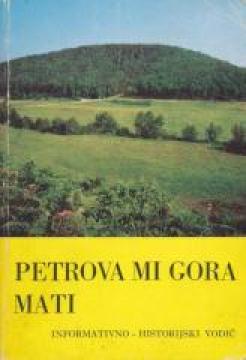
Petrova mi gora mati informativno-historijski vodč
Dimensions
17 x 12 cm
Pages
169
Publisher
SKD Prosvjeta, Zagreb, 1973.
Latin alphabet. Paperback.
Language: Croatian.
Two copies are available
Two copies are available
Are you interested in another book? You can search the offer using our search engine or browse books by category.
The book by Zagreb travel writer and professor Juraj Bubalo is a kind of encyclopedia of Croatian travelers and explorers. Unique in Croatian non-fiction, it popularizes the culture of exploration and reminds us that Croats have been part of global discov
Sjaj i tragika hrvatskoga oružja obrađuje izabrana poglavlja iz hrvatske ratne prošlosti.