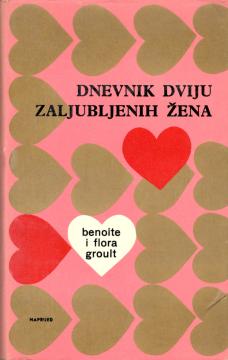
Dnevnik dviju zaljubljenih žena

Dnevnik dviju zaljubljenih žena

Benoite Groult, Flora Groult

Juliette and Marianne, two women with different characters and outlooks on life, reveal in their diaries their love affairs, marriages, disappointments, and search for independence and personal happiness. With an afterword by Predrag Matvejević.

The novel Diary of Two Women in Love by Benoîte and Flore Groult depicts the lives and feelings of two women – Juliette and Marianne – who, through personal notes, talk about love, marriage, passion and the position of women in society. The novel is structured as an exchange of diary entries in which each heroine expresses her own thoughts, doubts and experiences.

Juliette is more sensitive, romantic and inclined to idealize love. She believes in a strong emotional connection, but faces disappointments and limitations imposed on her by social expectations. Marianne is more independent, reasonable and critical of the traditional role of women. She tries to fight for the right to her own choice, freedom and a life outside of pre-established rules.

Through their relationships with men, the authors show different faces of love: infatuation, jealousy, infidelity, longing, suffering and the need for understanding. At the same time, they deal with issues of female identity, equality and a woman's right to decide her own destiny.

The novel is not only a love story but also a depiction of the changes in women's thinking in the 20th century. Benoîte and Flora Groult openly portray the inner world of their heroines and show that true happiness does not come only from loving another person, but also from accepting one's own personality and freedom.

Original title
Le Féminin pluriel
Translation
Ivan Čaberica
Graphics design
Boris Dogan
Dimensions
20.5 x 13 cm
Pages
302
Publisher
Naprijed, Zagreb, 1969.
 
Latin alphabet. Hardcover with dust jacket.
Language: Croatian.

One copy is available

Condition:Unused
 

Are you interested in another book? You can search the offer using our search engine or browse books by category.

You may also be interested in these titles

Sol, ovce i kamenje

Sol, ovce i kamenje

Magdaléna Platzová

A fresh, uninhibited literary view of Dalmatia. Four stories about Dalmatia told in the manner of the best pages of Czech literature. Bringing to life the scents of salt and sea, the author writes vivid prose full of color and flavor.

Fraktura, 2006.
Croatian. Latin alphabet. Paperback.
8.54
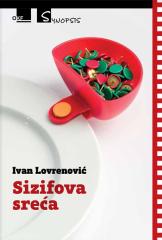
Sizifova sreća - razgovori, kronike

Sizifova sreća - razgovori, kronike

Ivan Lovrenović

Ivan Lovrenović's collection documents thirty years of change in Bosnia and Herzegovina through interviews, essays, and dialogues. The author, a witness to the era, examines old attitudes in the new reality, emphasizing the atrophy of rationality and soci

Synopsis, 2018.
Croatian. Latin alphabet. Paperback.
12.54
Imenik lijepih vještina I-II

Imenik lijepih vještina I-II

Miljenko Jergović

In The Directory of Fine Arts, Miljenko Jergović explores diverse topics, from literature to history, celebrating art and excellence. His essays offer deep understanding, imbued with intellectual passion and a love of the written word.

24 sata, 2018.
Croatian. Latin alphabet. Hardcover with dust jacket.
The book consists of two volumes
34.56
Razgovori s Krležom

Razgovori s Krležom

Predrag Matvejević

The book "Conversations with Krleža" by Predrag Matvejević provides a deep insight into the relationship of culture to the great writer Miroslav Krleža.

BIGZ, 1987.
Croatian. Latin alphabet. Paperback.
4.98
Varšavske beležnice : (1978 - 1984)

Varšavske beležnice : (1978 - 1984)

Kazimierz Brandys

One of the leading Polish writers from the end of the 20th century published his Diaries in 1981 and 1982, which cover the turbulent period of events in Poland in 1978-1984. This is a book of selections from those diary entries.

Prosveta, 1988.
Serbian. Cyrillic alphabet. Hardcover with dust jacket.
8.46
Skitam i pričam

Skitam i pričam

Momo Kapor

The book I'm wandering and talking was written for several years, and parts of it were published from Sunday to Sunday on the pages of the magazine Duga. Second, significantly expanded edition.

Znanje, 1982.
Serbian. Latin alphabet. Hardcover with dust jacket.
12.42