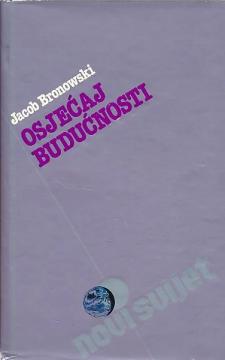
Osjećaj budućnosti - Eseji iz filozofije znanosti
No copies available
The last copy was sold recently.
No copies available
The last copy was sold recently.

Are you interested in another book? You can search the offer using our search engine or browse books by category.
Deleuze's philosophical reading of Proust's masterpiece "In Search of Lost Time." Deleuze interprets the novel as a system of signs and teaches how art produces higher cognition through the signs of love, memory, and art.
Gilles Deleuze's The Logic of Sense (1969) is one of his most important philosophical works. It explores the nature of sense, events, surfaces, and nonsense through the paradoxes of language, Stoic philosophy, and literature (Lewis Carroll).
Plato's dialogue Gorgias (c. 380 BC) in which Socrates debates with Gorgias, Polus, and Callicles about the nature of rhetoric, power, justice, and the good life. A harsh criticism of the Sophists and their oratory as flattery rather than knowledge.
Michel Foucault's The Birth of Biopolitics are lectures he gave in 1978–1979 at the Collège de France in which he analyzes the emergence of neoliberalism, government, biopolitics, and contemporary forms of power.
Tolstoy interprets the 1905 revolution as a moral upheaval: violence does not bring justice, but a new yoke. He sees lasting liberation in personal conscience, non-violence and Christian love, not in the state and coercion.