Vukovar i Vukovarci: Prilozi proučavanju povijesti Vukovara
Rare book

Vukovar i Vukovarci: Prilozi proučavanju povijesti Vukovara

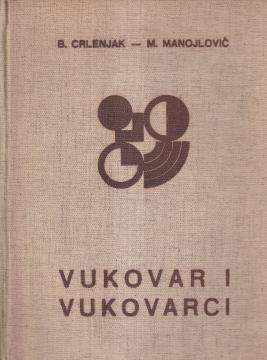
Brane Crlenjak, Mirko Manojlović

*Vukovar and the People of Vukovar* (1978) is a comprehensive historical monograph that depicts the development of Vukovar through the centuries, with an emphasis on the population, cultural life, social changes and everyday life of the city.

The book Vukovar and the People of Vukovar provides a broad, documented and visually rich presentation of the city of Vukovar before the war's destruction, with the intention of showing the city's identity through its history and people. Authors Brane Crlenjak and Mirko Manojlović approach the topic chronologically and thematically, creating a picture of the city as a living community shaped by diverse cultures, economy and urban development.

Of particular note are the chapters on the oldest archaeological traces, the development of the medieval fortress and the expansion of settlements along the Danube, where Vukovar gradually became an important commercial and administrative centre. The authors cover in detail the period of the 18th and 19th centuries, when the city experienced an economic boom thanks to crafts, trade and Danube navigation. This section also presents important families, city institutions and the transition from feudal to modern urban life.

A large part of the book is dedicated to the people of Vukovar – their customs, lifestyle, crafts, festivities and cultural societies. Photographs, illustrations and documents accompany the text and bring everyday life to life: from schools and churches to working-class neighborhoods, fairs, social gatherings and historical buildings that today represent the city's identity points.

Although the monograph was published in 1978, and therefore does not cover the period of the Homeland War, its depiction of pre-War Vukovar is precisely what makes it valuable: it gives a picture of the city as it was – multicultural, developed, strongly connected to the Danube and its people. This is a book that offers the reader a comprehensive, unobtrusively written and visually impressive history of a city whose past is as multi-layered as its population.

Editor
Stevo Grbatinić
Dimensions
29 x 22.5 cm
Pages
99
Publisher
Samoupravna interesna zajednica u oblasti kulture, Vukovar, 1978.
 
Latin alphabet. Hardcover.
Language: Croatian.

One copy is available

Condition:Used, excellent condition
Damages or inconvenience notice:
  • A message of a personal nature
 

Are you interested in another book? You can search the offer using our search engine or browse books by category.

You may also be interested in these titles

Maslinov vijenac 6

Maslinov vijenac 6

Drago Štambuk

The publication contains verses from poets awarded with the Olive Wreath at the Croatia Rediviva Heritage Days held in Selce on Brač from 2016-2020.

Croatia rediviva, 2021.
Croatian. Latin alphabet. Paperback.
16.84
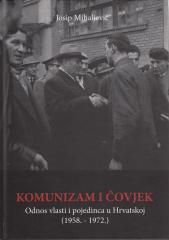
Komunizam i čovjek: Odnos vlasti i pojedinca u Hrvatskoj (1958.–1972.)

Komunizam i čovjek: Odnos vlasti i pojedinca u Hrvatskoj (1958.–1972.)

Josip Mihaljević

Josip Mihaljević's book analyzes the relationship between the government and the individual in communist Croatia (1958–1972), through repressive mechanisms, ideological pressures, and restrictions on personal freedom in the socialist system.

Hrvatski institut za povijest, 2016.
Croatian. Latin alphabet. Hardcover.
17.26
Osječka groblja

Osječka groblja

Stjepan Sršan

The book is deeply rooted in the local history and culture of Osijek, with an emphasis on cemetery motifs that serve as a metaphor for memory, death, and disappearance.

Povijesni arhiv u Osijeku, 1996.
Croatian. Latin alphabet. Paperback.
5.26
Nove stranke Hrvatske ’90

Nove stranke Hrvatske ’90

Anđelko Milardović

Collection of documents on the new multi-party electoral system of Croatia in 1990

ITP Baranja, 1990.
Croatian. Latin alphabet. Paperback.
6.64
Vodič kroz grad Osijek

Vodič kroz grad Osijek

An important document reflecting the state of the city immediately after World War II. The guide served as a practical tool for orientation and informing citizens and visitors about the urban layout and infrastructure of the city at that time.

Gradski N. O., Građevinski odjel u Osijeku, 1946.
Croatian. Latin alphabet. Paperback.
64.28
Iz povijesti Dalmacije

Iz povijesti Dalmacije

Šimun Jurišić

Fashion and customs, institutions and societies, Split theater, carnivals, Trogir and something about Trogir.

Vlastita naklada, 1984.
Croatian. Latin alphabet. Paperback.
4.62