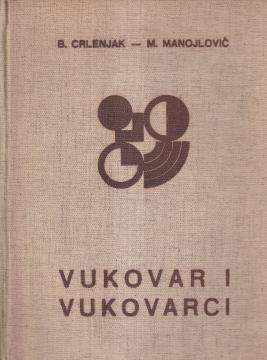
Vukovar i Vukovarci: Prilozi proučavanju povijesti Vukovara
*Vukovar and the People of Vukovar* (1978) is a comprehensive historical monograph that depicts the development of Vukovar through the centuries, with an emphasis on the population, cultural life, social changes and everyday life of the city.
The book Vukovar and the People of Vukovar provides a broad, documented and visually rich presentation of the city of Vukovar before the war's destruction, with the intention of showing the city's identity through its history and people. Authors Brane Crlenjak and Mirko Manojlović approach the topic chronologically and thematically, creating a picture of the city as a living community shaped by diverse cultures, economy and urban development.
Of particular note are the chapters on the oldest archaeological traces, the development of the medieval fortress and the expansion of settlements along the Danube, where Vukovar gradually became an important commercial and administrative centre. The authors cover in detail the period of the 18th and 19th centuries, when the city experienced an economic boom thanks to crafts, trade and Danube navigation. This section also presents important families, city institutions and the transition from feudal to modern urban life.
A large part of the book is dedicated to the people of Vukovar – their customs, lifestyle, crafts, festivities and cultural societies. Photographs, illustrations and documents accompany the text and bring everyday life to life: from schools and churches to working-class neighborhoods, fairs, social gatherings and historical buildings that today represent the city's identity points.
Although the monograph was published in 1978, and therefore does not cover the period of the Homeland War, its depiction of pre-War Vukovar is precisely what makes it valuable: it gives a picture of the city as it was – multicultural, developed, strongly connected to the Danube and its people. This is a book that offers the reader a comprehensive, unobtrusively written and visually impressive history of a city whose past is as multi-layered as its population.
No copies available
The last copy was sold recently.