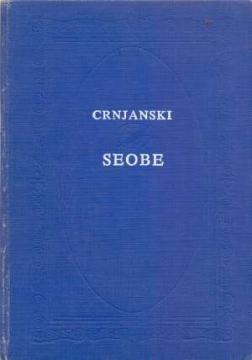
Seobe

Seobe

Miloš Crnjanski

Seobe (1929) is at the same time a family novel of three characters and a national novel about the Serbs in the Habsburg Monarchy at the time of Maria Theresa. Abridged edition edited by Slavko Leovac.

By poetically telling the story of the fate of the Serbian officer Vuk Isaković, his wife and his regiment during the military campaign in 1744, it branches into history about the general tragedy of not belonging, about wandering, the search for meaning and dreams of refuge.

Immediately after its publication, the novel received the SANU award. Parts 2 and 3 were subsequently published.

Dimensions
20 x 14 cm
Pages
269
Publisher
Veselin Masleša, Sarajevo, 1982.
 
Latin alphabet. Hardcover.
Language: Croatian.

No copies available

The last copy was sold recently.


Are you interested in another book? You can search the offer using our search engine or browse books by category.

You may also be interested in these titles

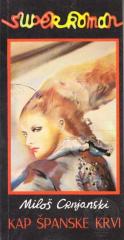
Kap španske krvi

Kap španske krvi

Miloš Crnjanski
NIRO Književne novine, 1985.
Serbian. Latin alphabet. Paperback.
2.98
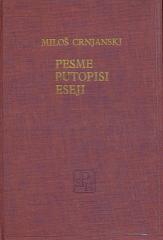
Pesme, putopisi, eseji

Pesme, putopisi, eseji

Miloš Crnjanski
Naprijed, 1967.
Serbian. Latin alphabet. Hardcover.
8.25 - 8.45
Julius Caesar

Julius Caesar

William Shakespeare

Agreat tragedy based on Plutarch’s account of the lives of Brutus, Julius Caesar, and Mark Antony.

Penguin books, 1994.
English. Latin alphabet. Paperback.
6.98
Ponor, sv. 1 – 2

Ponor, sv. 1 – 2

Ivan Gončarov

This two-volume novel follows the life of the main character, a young officer, through various events and challenges.

Veselin Masleša, 1969.
Croatian. Latin alphabet. Hardcover with dust jacket.
The book consists of two volumes
9.36
Odlazak iz Berlina

Odlazak iz Berlina

Joseph Kanon

A Cold War thriller that convincingly conveys the tense atmosphere in Germany after the end of World War II.

Znanje, 2016.
Croatian. Latin alphabet. Paperback.
4.14 - 4.16
Tri ratna druga

Tri ratna druga

Erich Maria Remarque

Three World War I comrades—Robbie, Otto, and Gottfried—try to survive in Weimar Germany in 1928. Amid economic crisis, poverty, and political violence, their friendship is their only refuge.

Minerva, 1954.
Serbian. Latin alphabet. Hardcover.
3.98