Povijest i klasna svijest: Studije o marksističkoj dijalektici
Georg Lukacs
A 1923 book by the Hungarian philosopher György Lukács, in which the author emphasizes the influence of the philosopher Georg W. F. Hegel on Karl Marx, and analyzes the concept of "class" and attempts to offer a philosophical justification for Bolshevism.
The book has become a classic because it accurately describes the world of Amazon, Uber, Netflix, and TikTok thirty years in advance. Ritzer does not curse fast food, but warns that if the whole of society turns into McDonald’s, we will remain full but hu
Jesenski i Turk, 1999.
Croatian. Latin alphabet. Paperback.
19.56 €
Law • Sociology • Political philosophy
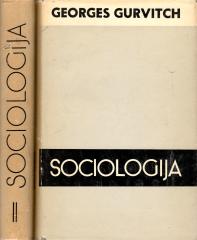
This seminal work by French sociologist Georges Gurvitch systematically presents the theoretical foundations, methods, and branches of sociology, defining social reality through deep-seated layers and total social phenomena.
Naprijed, 1966.
Croatian. Latin alphabet. Hardcover with dust jacket.
The book consists of two volumes
36.24 €
Culturology • Politicology • Sociology • Political philosophy
A classic work by one of the most influential sociologists of the 20th century, the founder of "figurative" or "process" sociology. The book is a programmatic manifesto against the then dominant structural-functionalist paradigm (Parsons) and pure positiv
Antibarbarus, 2007.
Croatian. Latin alphabet. Paperback.
8.267.43 €
Sociology • Political philosophy • Yugoslavia • Post-communism
This work presents current dilemmas and questions related to the (re)construction of the history and ideology of identity, both individually and on a comparative level regarding the so-called small nations, as special sociocultural groups.
MeandarMedia, 2023.
Croatian. Latin alphabet. Paperback.
7.46 €
Essays • Moral philosophy • Political philosophy • Political-historical essays
The book's starting point is that the Serbs were not only caught up in the Enlightenment later than its European foray in the 18th century, but they resisted it even when it caught up with them. In the Balkans, history followed different paths, had differ