Satir
Unique book
Rare book
Antique

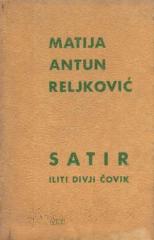
Satir

Matija Antun Reljković

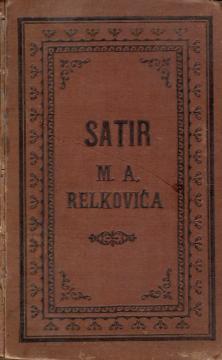
Fifth edition of the book from 1871. Original binding. The covers on the spine are slightly cracked in several places and the edges of the covers are slightly frayed. Compact book, pencil signature of the previous owner on the front page.

Satir iliti divji chovik is a satirical-narrative song in 11 cantos published in Dresden in 1762. In his song, Matija Antun Relković (1732 - 1798) describes the beauty of the Slavonian land and the neglect of the Slavonian peasants, for which he blames customs that he believes originated under Turkish influence. He introduces into the song an ancient mythological being, the Satyr, who advises Slavonians how to cultivate the land. The first edition had a lot of success, and even in the polemic about the work, positive echoes prevailed. In the second edition, Relković introduced the character of a Slavonian peasant who tells Satir how he accepted his criticisms and improved his work and life. Croatian literary historians judged Satire harshly: they invoked its importance in the process of enlightenment, but they did not find literary beauty in it. Relković viewed nature, especially his native Slavonia, as a physiocrat, i.e. he considered the land his only wealth, and agriculture the noblest and healthiest profession.

Dimensions
17 x 10 cm
Pages
169
Publisher
Naklada Dragutina Harscha, Osijek, 1871.
 
Latin alphabet. Hardcover.
Language: Croatian.

No copies available

The last copy was sold recently.


Are you interested in another book? You can search the offer using our search engine or browse books by category.

You may also be interested in these titles

Satir iliti divlji čovik

Satir iliti divlji čovik

Matija Antun Reljković
Glas Slavonije, 1974.
Croatian. Latin alphabet. Hardcover.
3.32 - 3.98
Tajna rijeke Luzette

Tajna rijeke Luzette

Miriam Delly

Young and temperamental orphan Gaïta Valprez lives wild and free by the Luzette River in a castle in Auvergne. When she is sent to boarding school, her rebellious spirit leads her into conflict, secrets and unexpected love.

Hrvatsko književno društvo Sv. Jeronima, 1930.
Croatian. Latin alphabet. Hardcover.
6.32
Kako sam ubila svoje dijete

Kako sam ubila svoje dijete

Pierre L'ermite

Moralistički roman napisan u formi ispovesti u kojem mlada žena priča kako je abortirala iz sujete, straha od skandala i neozbiljnosti, a zatim doživljava duboko kajanje, patnju i duhovno preobraćenje.

Knjižnica dobrih romana, 1929.
Croatian. Latin alphabet. Hardcover.
9.56
Srce

Srce

Edmondo de Amicis

„Srce“ Edmonda de Amičisa je klasična italijanska edukativna knjiga sa dirljivim pričama o prijateljstvu, hrabrosti i čovečnosti. Specijalno, četvrto izdanje, sa posvetom „Poklon našoj deci od Petra Kuničića“.

St. Kugli, 1902.
Croatian. Latin alphabet. Hardcover.
36.42
Ihvanus-Safa: Razgovor čovjeka sa životinjama

Ihvanus-Safa: Razgovor čovjeka sa životinjama

„Razgovor čoveka sa životinjama“, deo Rasail enciklopedije tajnog filozofskog saveza Ihvanus-Safa (obično se prevodi kao Iskrena braća, Verni prijatelj ili Čista braća) iz Basre, 10. vek, predstavlja književni i filozofski spomenik islamske kulture.

V.B.Z, 2008.
Croatian. Latin alphabet. Paperback.
9.38
Čipke

Čipke

Štefa Jurkić

Čipka (1929) Štefe Jurkić je ljubavni roman sa katoličkom porukom. Mlada heroina u Francuskoj, kroz ljubav i patnju, doživljava obraćenje i pronalazi smisao u svojoj veri, inspirisana legendom o Svetoj Terezi.

Hrvatsko književno društvo Sv. Jeronima, 1929.
Croatian. Latin alphabet. Hardcover.
9.52