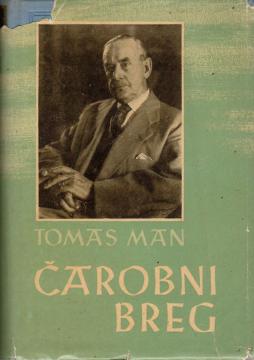
Čarobni breg

"The Magic Mountain" is considered a masterpiece of modernist literature. The novel is rich in symbolism and layers, and its main focus is on the inner development of the protagonist through encounters with different ideas and worldviews.
The book was inspired by Mann's three-week trip to Switzerland to visit his sick wife in a sanatorium in 1912. The first part of the book accurately records Mann's impressions of the place itself and its culture. Like Hans Castorp, the main character, Thomas Mann was diagnosed with a wet spot in his lung towards the end of his visit, but luckily it didn't stay. Mann decided to describe the danger of the mixture of freedom and disease that isolates young people and distracts them from a real and active life. Originally, "Magic Hill" was conceived as a novella the size of "Death in Venice". However, Mann soon realized that the story was taking its own course. The beginning of the First World War forced Mann to suspend work on the novel and reassess his view of European culture. After the war, he reviewed all the material, designing it this time as a critique of the unhealthy and destructive forces swirling around Europe and which in a few years led to the war - the forces he considered solely responsible for the bloody catastrophe. It took him 12 years to finish what he saw as a "serious joke".
The book was immediately recognized by publishers in Germany and quickly became popular in Europe and America. Mann believed that "The Magic Mountain" should be read twice to be fully enjoyed.
No copies available
The last copy was sold recently.