Velika buna

Velika buna

Bratko Kreft

"The Great Revolt" is a historical novel by Slovenian writer Bratko Kreft, which deals with the Peasants' Revolt of 1573 in the territory of present-day Croatia and Slovenia.

This novel provides an in-depth look at the causes, course, and consequences of one of the most significant peasant uprisings against feudal rule in medieval Europe.

Kreft provides a detailed account of the social and economic circumstances that led to the peasants' discontent, depicting the injustices and oppression they were subjected to by the nobility and the church. Through the characters of the leaders of the uprising, such as Matija Gubec, the author evokes the courage and determination of the oppressed layers of society in their fight for justice and a better life.

The novel also explores interpersonal relationships, moral dilemmas, and internal conflicts of the characters, providing the reader with a broader picture of the social and political circumstances of the time. Kreft's writing style is characterized by realistic descriptions and deep psychological analysis of the characters, which contributes to the authenticity and believability of the story.

"The Great Revolt" is not just a historical account of a single event, but also a universal story about the struggle for freedom, justice, and human dignity. Kreft's novel remains a significant contribution to Slovenian and regional literature, reminding us of the importance of resisting injustice and striving for social equality.

Original title
Velika puntarija
Translation
Tone Potokar
Editor
Tone Potokar
Dimensions
20.5 x 13.5 cm
Pages
213
Publisher
Spektar, Zagreb, 1974.
 
Latin alphabet. Hardcover.
Language: Croatian.

One copy is available

Condition:Unused
 

Are you interested in another book? You can search the offer using our search engine or browse books by category.

You may also be interested in these titles

Pokondirena tikva

Pokondirena tikva

Jovan Sterija Popović

In the comedy Pokondirena tikva, the main character Fema, an ordinary citizen obsessed with the upper class, comically tries to play the role of a lady. The play mocks snobbery, hypocrisy, and the desire for someone else's appearance and manners.

Mladost, 1987.
Serbian. Latin alphabet. Paperback.
6.54
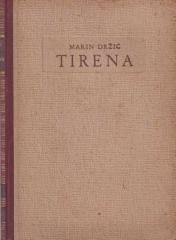
Tirena

Tirena

Marin Držić

Pastoral drama (comedy) in five acts, written in double-rhymed twelve-line stanzas (with eight-line stanzas in the lyrical parts), the oldest preserved play by Držić (premiered in 1548 in Dubrovnik, printed in 1551 in Venice).

Matica hrvatska, 1948.
Croatian. Latin alphabet. Hardcover.
7.36
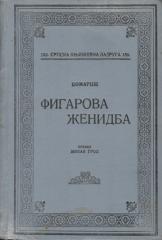
Figarova ženidba ili Ludi dan: Komedija u pet činova

Figarova ženidba ili Ludi dan: Komedija u pet činova

Pierre-Augustin Caron de Beaumarchais

The comedy "The Marriage of Figaro, or The Mad Day" (1784) is a sequel to The Barber of Seville. The Marriage of Figaro criticizes social injustices through love affairs and intrigue, celebrating Figaro and Susanna's ingenuity in the fight against aristoc

Srpska književna zadruga (SKZ), 1925.
Serbian. Cyrillic alphabet. Hardcover.
7.58
Zaplakala stara majka Džaferbegova: Drama u 3 čina

Zaplakala stara majka Džaferbegova: Drama u 3 čina

Jakša Kušan

A three-act drama by Jakša Kušan based on the motifs of the famous Bosnian sevdalinka of the same title, it is one of Kušan's early dramatic works inspired by the Muslim environment of Bosnia.

Tiskara braća Jakšić, 1942.
Croatian. Latin alphabet. Paperback.
9.74
Svadbeni let

Svadbeni let

Milan Begović

The drama depicts an idealized youthful marriage between an aircraft designer and a young woman and its rapid dissolution after the wedding. One of Begović's most important dramatic works, recognizable for its irony, psychological depth, and criticism of

Hrvatski štamparski zavod d.d., 1922.
Croatian. Latin alphabet. Paperback.
17.36 - 24.62
Euripidove drame: Knjiga druga

Euripidove drame: Knjiga druga

Euripid

The second volume of Euripides' tragedies, translated by Koloman Raca. It contains some of his most famous and powerful plays, in which the author explores the human psyche, passions, and man's conflict with myths and fate.

Matica hrvatska, 1920.
Croatian. Latin alphabet. Paperback.
10.00