Na Drini ćuprija

Na Drini ćuprija

Ivo Andrić

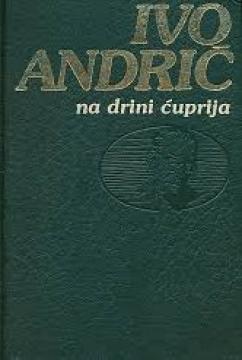
Ivo Andrić's novel, published in 1945, is a masterpiece of world literature and winner of the Nobel Prize in 1961. Set in Višegrad, the story follows the history of the bridge over the Drina River from the 16th to the 20th centuries, built by Mehmed-paša

The Drina Bridge is not only an architectural marvel, but also a symbol of connections between cultures, religions and eras, as well as a witness to conflict and suffering. The novel chronologically depicts the lives of the people around the bridge – Bosniaks, Serbs, Turks, Jews – through the centuries of the Ottoman Empire, Austro-Hungarian rule and World War I. Andrić masterfully interweaves the destinies of individuals, such as the girl Fata, who throws herself off the bridge, or the peasants struggling with floods and wars. The bridge stands as a metaphor for permanence amidst the transience of human lives, reflecting the complex relationships between East and West.

Through rich descriptions and a narrative style that combines epic breadth with intimate moments, Andrić explores themes of fate, identity, power and transience. The novel deals with universal questions of human existence, but also with the specificities of Balkan history, showing how the bridge connects but also divides communities. It ends tragically, with the partial collapse of the bridge in 1914, symbolizing the end of an era. The work has been praised for its philosophical depth and literary beauty, leaving a lasting impact on readers.

Editor
Petar Džadžić, Muharem Pervić
Graphics design
Dobrilo Nikolić
Dimensions
19.5 x 13.5 cm
Pages
399
Publisher
Svjetlost, Sarajevo, 1988.
 
Latin alphabet. Hardcover.
Language: Serbian.

One copy is available

Condition:Unused
 

Are you interested in another book? You can search the offer using our search engine or browse books by category.

You may also be interested in these titles

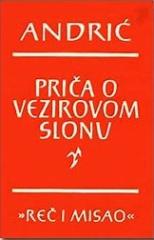
Priča o vezirovom slonu

Priča o vezirovom slonu

Ivo Andrić

In diesem Meisterwerk von Andrić öffnen Sie die Tür zu einer Welt, in der Macht auf Wunder trifft und Angst mit Hoffnung verschmilzt! Wenn Sie tiefe Emotionen, die Mystik des Orients und die Stärke der Menschen mögen, wartet „Die Geschichte vom Elefanten

Rad, 1962.
Serbian. Latin alphabet. Paperback.
1.62
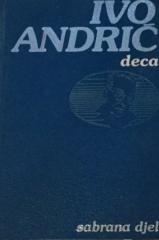
Deca

Deca

Ivo Andrić
Mladost, 1981.
Croatian. Latin alphabet. Hardcover.
6.99
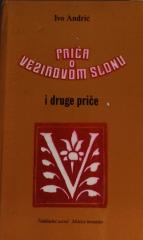
Priča o vezirovom slonu i druge priče

Priča o vezirovom slonu i druge priče

Ivo Andrić
Nakladni zavod Hrvatske, 1983.
Croatian. Latin alphabet. Hardcover.
3.22
Dok ležah na samrti

Dok ležah na samrti

William Faulkner

Faulkners Roman aus dem Jahr 1930 ist ein klassisches Beispiel modernistischer Literatur. Aufgrund seiner innovativen Struktur wird er oft mit Joyces „Ulysses“ verglichen, ist aber aufgrund seines Fokus auf die Familie zugänglicher.

Rad, 1985.
Croatian. Latin alphabet. Paperback.
3.26
Deobe 1-3

Deobe 1-3

Dobrica Ćosić

Dieses Werk, das in diesem Jahr mit dem NIN-Preis ausgezeichnet wurde, gilt als eines der bedeutendsten der serbischen Literatur nach dem Zweiten Weltkrieg.

Prosveta, 1961.
Serbian. Cyrillic alphabet. Hardcover with dust jacket.
The book consists of 3 volumes
11.42
Zagrepčanka

Zagrepčanka

Branislav Glumac

Branislav Glumac veröffentlichte 1974 einen Roman ohne Punkte und Kommas, den unerbittlichen Gedankenstrom eines jungen Rebellen. Das im sozialistischen Jugoslawien erschienene Werk löste mit seiner Offenheit einen Skandal aus und wurde zu einem Klassiker

IROS, 1986.
Croatian. Latin alphabet. Hardcover.
8.22 - 8.24