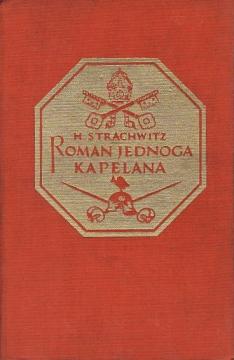
Roman jednoga kapelana
A novel from the era of the Kulturkampf in Germany, which depicts the suffering and resistance of a Catholic chaplain in conflict with the Bismarckian persecution of the Church, religious struggle and fidelity to ideals.
The work is a historical-psychological novel set during the Kulturkampf (1871–1887), Bismarck's struggle against the Catholic Church in the German Empire. The main character is a young Catholic chaplain who experiences persecution in a small parish (Heiligenberg): the imprisonment of priests, the deprivation of church rights, state supervision and attempts at secularization. The novel depicts his inner struggle, pastoral work, solidarity with the faithful and moral strength in defending faith and freedom of conscience.
Strachwitz writes with a clear Catholic and conservative stance, emphasizing the heroism of the "small" priest against the state apparatus. The work is full of authentic details from that turbulent period – the May Laws, the persecution of bishops, the disintegration of Catholic organizations and the resistance of the population. The style is narrative, warm and engaging, typical of Catholic fiction of the early 20th century, intended for a wider audience.
In the Croatian context, the novel was part of a popular edition of Catholic novels that strengthened religious and national identity in the interwar period. Today it is read as an interesting document about the conflict between the Church and the modern state, and as a testimony to the theme of religious freedom and resistance to totalitarian control.
A rare antiquarian edition, valuable for lovers of historical prose with a Catholic charge.
One copy is available