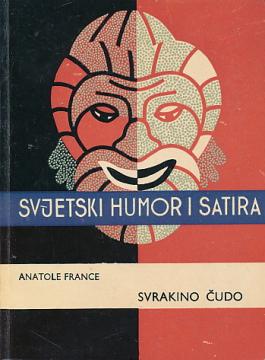
Svrakino čudo

Svrakino čudo

Anatole France

In the work, the author talks in a witty and satirical way about human credulity, superstition and the tendency to declare ordinary events to be miracles.

The plot is based on an incident involving a magpie, a bird that accidentally causes confusion among people. People interpret its behavior as a sign of a miracle and begin to spread various stories and rumors. As the word of the “miracle” spreads, the event becomes more and more exaggerated, and people increasingly believe in things that actually have no real supernatural meaning. Anatole France shows through humor how prone people are to believe in fabrications and how easily a mass is created that uncritically accepts stories without evidence. At the same time, he criticizes a society that trusts sensations more than reason.

Translation
Branka Hergešić, Ivo Hergešić
Dimensions
16 x 12 cm
Pages
121
Publisher
Naprijed, Zagreb, 1964.
 
Latin alphabet. Paperback.
Language: Croatian.

One copy is available

Condition:Used, excellent condition
 

Are you interested in another book? You can search the offer using our search engine or browse books by category.

You may also be interested in these titles

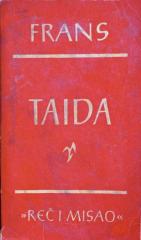
Taida: roman iz aleksandrijskih vremena

Taida: roman iz aleksandrijskih vremena

Anatole France

The novel Taida, published in 1890, is one of the most famous works by French Nobel Prize winner Anatole France. The work is inspired by the legend of Saint Taida of Egypt, a 4th-century courtesan who converted to Christianity.

Rad, 1961.
Serbian. Latin alphabet. Paperback.
1.99
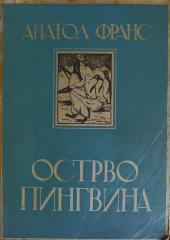
Ostrvo pingvina

Ostrvo pingvina

Anatole France
Kultura, 1946.
Serbian. Cyrillic alphabet. Paperback.
3.99
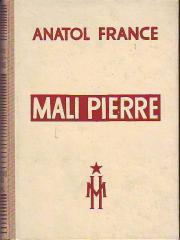
Mali Pjer

Mali Pjer

Anatole France
Novo pokolenje, 1950.
Serbian. Cyrillic alphabet. Paperback with dust jacket.
2.99
Erogena zona

Erogena zona

Philippe Djian
Mladost, 1989.
Croatian. Latin alphabet. Hardcover with dust jacket.
6.74
Banco: Sve ili ništa

Banco: Sve ili ništa

Henri Charrière

In his book Banco – All or Nothing, Henri Charrière describes his life after escaping from prison in French Guiana. Seeking redemption, he embarks on an honest life, but through numerous adventures and shady dealings, he once again tests the limits of fre

Alfa, 1977.
Croatian. Latin alphabet. Hardcover with dust jacket.
11.56
Baselska zvona

Baselska zvona

Louis Aragon

The novel follows three women: Diane, a noblewoman; Catherine Simonidzé, a feminist; and the real Clara Zetkin, a communist. Through their destinies, the crisis of bourgeois society, women's emancipation, and the path to communism are depicted.

Kultura, 1946.
Serbian. Latin alphabet. Hardcover.
5.76