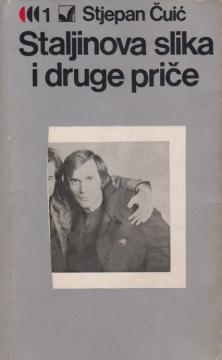
Staljinova slika i druge priče

Staljinova slika i druge priče

Stjepan Čuić, Stjepan Čuić

Stjepan Čuić’s 1975 debut short-story collection presents allegorical, politically charged, and fantastic tales about totalitarianism, fear, ideological pressure, and the absurdity of everyday life.

The short story collection Stalin’s Portrait and Other Stories (Staljinova slika i druge priče) by Croatian writer Stjepan Čuić, published in 1975 (by the Zagreb-based publishing house Mladost), stands as one of the most significant and influential works of Croatian "fantastic" prose from the 1970s. With this collection, Čuić established himself as an authentic voice in domestic literature, blending elements of the grotesque, political satire, and the fantastic. The collection’s central motif is the relationship between the individual and a repressive ideological system. Through allegorical and absurd situations—where reality, rural and urban daily life, and fantastic twists intertwine—the author explores the mechanisms of fear, conformity, dogmatism, and censorship. The title story, like the others in the collection, addresses the consequences of a totalitarian mindset and political pressures on the ordinary person in post-war society in a manner that is both subtle and incisive. Written with polished craft and a keen sense for dialogue, dark humor, and narrative tension, Stalin’s Portrait and Other Stories marked a turning point in Čuić’s body of work. The book stands as a compelling literary monument to an era, offering—through its fusion of the fantastic and social criticism—deep insight into the psychology of subservience and the struggle for personal freedom.

Editor
Dujo Sladojević
Dimensions
20 x 12.5 cm
Pages
130
Publisher
Naklada CDD, Zagreb, 1975.
 
Latin alphabet. Paperback.
Language: Croatian.

One copy is available

Condition:Used, excellent condition
 

Are you interested in another book? You can search the offer using our search engine or browse books by category.

You may also be interested in these titles

Tajna lijepe Cvijete

Tajna lijepe Cvijete

Julius Zeyer

A psychological novel about the marriage of two opposite souls. The marriage begins unhappily due to misunderstanding and differing expectations. Through suffering and sacrifice, the couple gradually find true love and harmony.

Knjižnica dobrih romana, 1927.
Croatian. Latin alphabet. Hardcover.
5.36 €
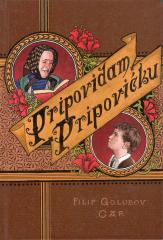
Pripovidam pripovićku

Pripovidam pripovićku

Filip Golubov-Car

A collection of authentic Baranja tales and folk songs. Through dialect, humor, and warm images of everyday life, the author preserves the spirit of Baranja, its people, customs, and rich oral tradition.

KUD Baranjski Šokci, 2023.
Croatian. Latin alphabet. Hardcover.
8.74 €
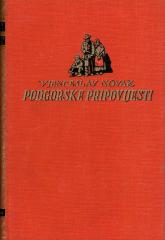
Podgorske pripovijesti

Podgorske pripovijesti

Vjenceslav Novak

A collection of realistic stories by Vjenceslav Novak about life in the poor hinterland of Senj. They depict the difficult everyday life of the people of Podgora, poverty, customs, family dramas and the struggle for dignity in the harsh Podgora environmen

Minerva nakladna knjižara, 1933.
Croatian. Latin alphabet. Hardcover.
6.34 €
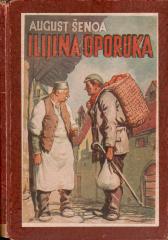
Ilijina oporuka / Lijepa Anka

Ilijina oporuka / Lijepa Anka

Šenoa
August Šenoa

Book 16 of the Collected Works of August Šenoa combines two powerful narratives: a satirical critique of civic immorality and wastefulness in Ilija's Testament and a romantic, dramatic story of unhappy love and social barriers in Lijepa Anka.

Naklada knjižare Preporod, 1943.
Croatian. Latin alphabet. Hardcover.
9.36 €
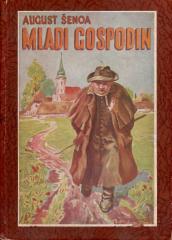
Mladi gospodin

Mladi gospodin

Šenoa
August Šenoa

August Šenoe's Young Gentleman, Book 4 of Collected Works, is a humorous story about the experiences of the young chaplain Janko Lugarić in the parishes of Posavina. A popular, illustrated edition with illustrations by Andrija Maurović.

Naklada knjižare Preporod, 1942.
Croatian. Latin alphabet. Hardcover.
11.42 €
Sabrana djela A. P. Čehova #4: Dan izvan grada

Sabrana djela A. P. Čehova #4: Dan izvan grada

Čehov
Anton Pavlovič Čehov

The fourth volume of Chekhov's works contains novellas and humoresques, which were mostly written in 1886. Still writing for a fee in daily newspapers, Chekhov often had to subordinate his art to comprehensibility and cheap humor due to the taste of the r

Zora, 1959.
Croatian. Latin alphabet. Hardcover with dust jacket.
9.56 €