Sunce i sjena
Antique
Rare book

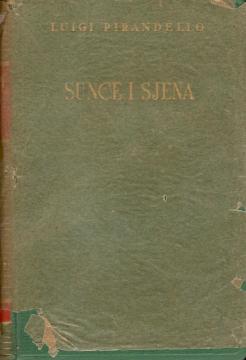
Sunce i sjena

Luigi Pirandello

Pirandello's essayistic-reflexive work "Sun and Shadow" explores the fragility of identity and the difference between who we are and what others see, depicting a man torn between inner truth and social masks.

In his essay The Sun and the Shadow, Pirandello philosophically depicts a man torn between the clear, hard light of public life and the soft, wavering shadows of his private life. The sun here is not just a source of light but an inexorable spotlight that illuminates everything that society wants to see: a neat image, a solid character, an identity without cracks. In this light, the characters feel naked, exposed, almost forced to be the version of themselves that others expect. In contrast, the shadow becomes their hidden space – fluid, warm, full of inner fractures and unspoken thoughts.

Pirandello describes moments in which the characters, almost like double beings, move between these two worlds: in the sun they speak confidently, and in the shadow they whisper their true doubts. The sun's rays emphasize every imperfection, while the shadow provides a temporary respite, but also a silent threat that they will never be able to come out into the light as whole persons. In this constant transition from light to darkness there is a sense of anxiety – as if identity is constantly slipping away, changing depending on who is looking and from what angle the light falls.

The text thus acquires an almost visual dynamic: the light flickers, the shadows move, and man constantly tries to piece himself together from these fragile parts. Pirandello thereby emphasizes that the truth about us is always in a play of contrasts – never completely in the sun, never completely in the shade – but in a restless, human mixture of both.

Original title
Il sole e l’ombra
Translation
Dubravko Dujšin
Editor
Slavko Batušić
Dimensions
19 x 13 cm
Pages
208
Publisher
Savremena biblioteka, Zagreb, 1941.
 
Latin alphabet. Hardcover with dust jacket.
Language: Croatian.

One copy is available

In the original cardboard box.
Condition:Unused
 

Are you interested in another book? You can search the offer using our search engine or browse books by category.

You may also be interested in these titles

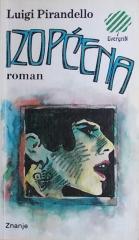
Izopćena

Izopćena

Luigi Pirandello
Znanje, 1987.
Croatian. Latin alphabet. Paperback.
4.86 - 4.99
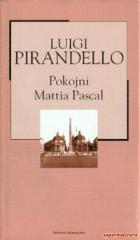
Pokojni Mattia Pascal

Pokojni Mattia Pascal

Luigi Pirandello

Luigi Pirandello's novel The Late Matthias Pascal (1904), a masterpiece of Italian literature, explores themes of identity, freedom, and social conventions through a tragic yet ironic story of a man trying to escape his life.

Jutarnji list, 2004.
Croatian. Latin alphabet. Hardcover with dust jacket.
4.56
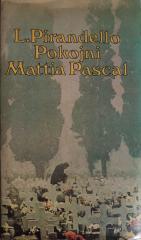
Pokojni Mattia Pascal

Pokojni Mattia Pascal

Luigi Pirandello

Luigi Pirandello's novel The Late Matthias Pascal (1904), a masterpiece of Italian literature, explores themes of identity, freedom, and social conventions through a tragic yet ironic story of a man trying to escape his life.

Sveučilišna naklada Liber (SNL), 1982.
Croatian. Latin alphabet. Hardcover with dust jacket.
4.99 - 5.62
Mrka kapa

Mrka kapa

Aristid Teofanović

Mrka kapa is a book of short prose written under the pseudonym Aristid Teofanović, used by Slobodan Blagojević. Blagojević is also known by the heteronym Anhel Antonić (poetry) and other works under his real name.

Feral Tribune, 2001.
Croatian. Latin alphabet. Paperback.
9.36
I drugi su pjevali o ratu: Odjeci raspada Jugoslavije u engleskoj i američkoj književnosti

I drugi su pjevali o ratu: Odjeci raspada Jugoslavije u engleskoj i američkoj književnosti

Muharem Bazdulj

In this book of essays, Muharem Bazdulj analyzes how the collapse of Yugoslavia and the wars of the 1990s resonated in Anglo-Saxon literature – from pre-war stereotypes to war and post-war depictions.

Biblioteka XX vek, 2013.
Croatian. Latin alphabet. Paperback.
8.24
Poezija i zbilja

Poezija i zbilja

Johann Wolfgang Goethe

Goethe's greatest autobiographical prose, written between 1811 and 1833, covers his life from his birth in 1749 in Frankfurt to 1775, when he went to Weimar at the invitation of Duke Karl August.

Matica hrvatska, 1953.
Croatian. Latin alphabet. Hardcover with dust jacket.
18.42