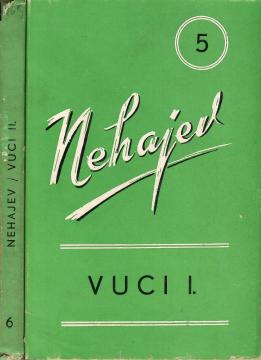
Vuci I-II
Historischer Roman über Fürst Krsto Frankopan (1482–1527). Ein psychologisches Porträt eines einflussreichen kroatischen Adligen in den turbulenten Zeiten der Konflikte mit Venedig, den Habsburgern und den Türken. Seltene Kriegsausgabe.
Band 5–6 der Werke von Milutin Nehajev präsentiert eines der bedeutendsten Werke der kroatischen Literatur des 20. Jahrhunderts – den historischen Roman Vuci, der in zwei Bänden als Teil der Gesamtausgabe des Kroatischen Verlags- und Bibliographischen Instituts erschienen ist.
Der Roman wurde ursprünglich 1928 anlässlich des 400. Todestages von Krsto Frankopan, dem Fürsten von Krk, Senj und Modruš, veröffentlicht. Nehajev verfasste ihn nach eingehenden historischen Studien über die Frankopaner, und das Werk gilt als Wendepunkt in der Entwicklung des kroatischen historischen Romans. Es löst die klassische Šenoinische Struktur auf und deutet einen moderneren, neohistorischen Ansatz an.
Die Handlung schildert das letzte Drittel von Krsto Frankopans Leben – von seiner Gefangenschaft bei Venedig im Jahr 1514 über seine lange Haft in Torresella und Mailand, seine Flucht, seine Rückkehr in die Heimat, seine politischen Kämpfe bis hin zu seinem tragischen Tod bei Varaždin im Jahr 1527. Anhand des Schicksals dieses mächtigen Adligen und Heerführers zeichnet der Autor ein umfassenderes Bild der kroatischen Geschichte in der Zeit der Konflikte zwischen den Großmächten: Venedig, den Habsburgern, Ungarn, Kroatien und der türkischen Bedrohung.
Nehajew bietet kein klassisches Heldenbild, sondern ein tiefgründiges psychologisches Porträt einer komplexen Persönlichkeit – eines starken, ehrgeizigen, aber auch verletzlichen Mannes, der mit Verrat, Liebesverlust (seiner Frau Apollonia), politischen Enttäuschungen und der Unmöglichkeit vollständiger Souveränität konfrontiert wird. Der Roman behandelt Themen wie Nationalbewusstsein, den Kampf um die kroatische Staatlichkeit, den Konflikt zwischen Ideal und Realität und die historische Wiederholbarkeit des Leidens eines kleinen Volkes.
Der Stil ist reif, analytisch und subtil – charakteristisch für Nehajevs moderne Prosa. Der Autor verbindet meisterhaft dokumentarische Präzision (historische Ereignisse werden getreu dargestellt) mit literarischer Freiheit, inneren Monologen und der psychologischen Tiefe seiner Figuren. Die Sprache ist reichhaltig, bildhaft und rhythmisch und vermittelt eine ausgeprägte Atmosphäre des 16. Jahrhunderts.
In der kroatischen Literaturgeschichte gilt Vuci als Übergangswerk zwischen dem traditionellen historischen Roman und den moderneren Ansätzen des 20. Jahrhunderts. Für Liebhaber des kroatischen Erbes, der Geschichte der Frankopan-Dynastie und anspruchsvoller historischer Prosa ist dieses Buch ein Muss.
Die Ausgabe von 1944, insbesondere mit dem Originaleinband, ist heute eine Rarität und stellt einen wertvollen Teil des Gesamtwerks von Milutin Nehajev (1880–1931) dar, einem der vielseitigsten und gebildetsten Autoren der kroatischen Moderne.
The book consists of two volumes.
Jedan višetomni primjerak je u ponudi.
- Oštećen omot