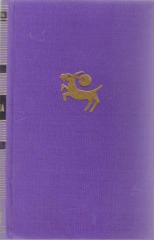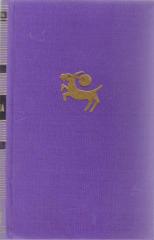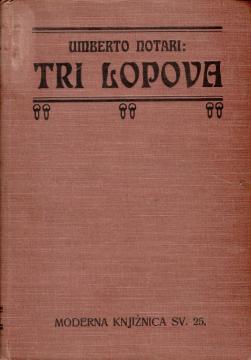
Tri lopova (Moj stric milijarder): Roman premodernih običaja
Rare book
Antique

Tri lopova (Moj stric milijarder): Roman premodernih običaja

Umberto Notari

Three Thieves is a satirical novel about three thieves of different levels — from a petty thief to a prominent financial manipulator. A witty critique of society, morality, and capitalism with the subtitle "My Billionaire Uncle."

The Italian writer, journalist and publisher Umberto Notari (1878–1950) published this satirical novel in 1908, and its Croatian translation appeared ten years later and quickly became popular among readers.

The Three Thieves is a witty and sharp satire on social norms, hypocrisy and capitalist morality. Through the story of three thieves of different profiles — from a small, likable thief who steals to survive, to a professional pickpocket, to a reputable thief in gloves who steals millions through stock market speculation and financial machinations — Notari shows how in society everyone steals, only the bigger thieves do it more legally and respectably.

The book has two subtitles: My Billionaire Uncle and A Novel of Premodern Customs – for Hermaphrodites of All Countries, which clearly indicates the author's ironic and provocative tone. Notari humorously and sarcastically takes on bourgeois society, its double standards, and the moneyed elite that enriches itself at the expense of others, while at the same time presenting itself as a pillar of society.

The style is lively, fast, and fluid, full of irony and witty observations. The novel is easy to read, but it carries sharp social criticism, which was a characteristic of Notari's works (he is also known for the scandalous novel Quelle signore).

In Croatia and Yugoslavia, this title was quite in demand in the interwar period because it perfectly suited the spirit of the times — a period of economic crisis, speculation, and growing dissatisfaction with the rich.

Today, The Three Thieves is an interesting testimony to Italian literature between the two wars and an excellent choice for fans of satirical prose, social criticism, and light but clever fiction.

Original title
I tre ladri (Mio zio miliardario): Romanzo di costumi ultramoderni
Translation
Vladimir Matošić
Dimensions
20 x 14 cm
Pages
104
Publisher
Moderna knjižnica, Zagreb, 1919.
 
Latin alphabet. Hardcover.
Language: Croatian.

One copy is available

Condition:Used, excellent condition
Damages or inconvenience notice:
  • Slight damage to the cover
 

Are you interested in another book? You can search the offer using our search engine or browse books by category.

You may also be interested in these titles

Božanstvena komedija: Pakao

Božanstvena komedija: Pakao

Dante Alighieri

Inferno is the first part of Dante's Divine Comedy. In Inferno, he begins his journey with Virgil, who will guide him through all three states of the soul all the way to God himself. This is the second edition of Isa Kršnjavi's translation into Croatian.

Grafički, umjetnički i nakladni zavod Jugoslavija, 1919.
Croatian. Latin alphabet. Hardcover.
48.56
Predvojeni vikont

Predvojeni vikont

Italo Calvino

The Biscounted Viscount is a novel by Italo Calvino published in 1952. It is the first part of the Our Ancestors trilogy, which also includes the short novels The Baron in the Trees from 1957 and The Nonexistent Knight from 1959.

Nolit, 1965.
Serbian. Latin alphabet. Hardcover with dust jacket.
6.32
Život je igra

Život je igra

Alberto Moravia

The book consists of several stories that explore the complexity of human behavior, often through an ironic and satirical depiction of everyday life.

Svjetlost, 1965.
Serbian. Latin alphabet. Paperback.
3.46 - 3.72
Svetlosti Rima

Svetlosti Rima

Alberto Moravia

Through these stories, Moravia explores themes of social inequality, the struggle for survival, and human frailty, portraying them with a mix of humor, irony, and realistic observation.

Svjetlost, 1965.
Serbian. Latin alphabet. Paperback.
3.82 - 3.92
Lažljivi život odraslih

Lažljivi život odraslih

Elena Ferrante

The Lying Life of Adults (2019), a stand-alone novel by Elena Ferrante, takes us to Naples in the 1990s through the eyes of fourteen-year-old Giovanna Trade, a bright, middle-class girl whose world falls apart with the discovery of her family's lies.

Profil Knjiga, 2020.
Croatian. Latin alphabet. Paperback.
15.62
Kronika o siromašnim ljubavnicima

Kronika o siromašnim ljubavnicima

Vasco Pratolini

In Florence 1925–1926, in the poor Via del Corno, the residents live in love, poverty and fear. The arrival of fascism destroys the community: lovers fight, some die from violence, but popular solidarity survives.

Sveučilišna naklada Liber (SNL), 1982.
Croatian. Latin alphabet. Hardcover with dust jacket.
3.76