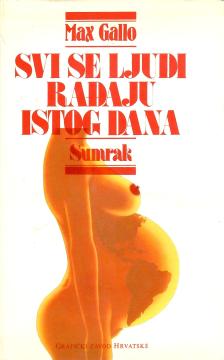
Svi se ljudi rađaju istog dana: Sumrak
In Twilight, the lives of seven people born in 1900 break under the weight of the wars, ideologies, and violence of the 20th century, as the initial promises of the era give way to loss, division, and historical darkness.
Twilight, the second part of the novel All Men Are Born on the Same Day, continues to follow the fates of seven people born on January 1, 1900, in different parts of the world, but now in a period when the initial differences between them turn into open historical ruptures. If Dawn was a novel about entering a century and the formation of life paths, Twilight shows what happens when these paths are overtaken by wars, ideologies, political violence and the collapse of the illusion of linear progress.
The focus is no longer just on the question of where someone comes from, but what remains of an individual when history forces them to make a choice, compromise, adapt or collapse. The characters mature in a world marked by social conflicts and global crises, and their personal decisions - love, family, moral and political - take a heavier toll than in the first part. Gallo continues to lead a parallel plot, but now with more consequences: what in Dawn was a hint of differences, here becomes an unequal distribution of power, fear, responsibility and survival.
The title Twilight accurately indicates the tone of the novel: this is a book about the fading hopes of the turn of the century. The fates of the heroes no longer unfold in a space of possibility, but in a time in which history narrows the choices and leaves permanent scars.
One copy is available