Madame Bovary
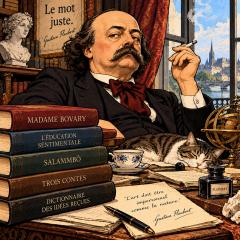
Emma Bovary, die Frau eines Provinzarztes, sucht das romantische Glück in Liebesaffären und Luxus. Ihre Träume kollidieren mit der Realität und führen zum Ruin.
Madame Bovary (1857) ist das Meisterwerk von Gustave Flaubert und einer der einflussreichsten Romane des 19. Jahrhunderts. Das Werk ist von entscheidender Bedeutung für die Entwicklung des Realismus und des modernen Romans. Flaubert arbeitete fünf Jahre lang daran und strebte nach der Perfektion des Stils – le mot juste (das richtige Wort). Der Roman sorgte wegen „Unsittlichkeit“ für einen Skandal und führte zu einem Prozess (Flaubert wurde freigesprochen).
Die Handlung folgt dem Leben von Emma Rouault, der Tochter eines wohlhabenden Bauern, die Charles Bovary, einen einfachen Landarzt, heiratet. Emma, aufgewachsen mit romantischer Literatur (Walter Scott, Lamartine), träumt von leidenschaftlicher Liebe, Luxus und erhabenen Gefühlen. Die Ehe im provinziellen Yonville wird ihr schnell langweilig. Sie bringt eine Tochter zur Welt, Bertha, doch die Mutterschaft erfüllt sie nicht. Er sucht nach Sinn in außerehelichen Beziehungen: zuerst mit dem Adligen Rodolphe, dann mit dem jungen Notar Léon. Er lebt über seine Verhältnisse, verschuldet sich und verfällt in Verzweiflung.
Flaubert schildert meisterhaft das Leben in der Provinz: Kleinlichkeit der Bürger, Heuchelei, Begrenztheit und Banalität des Alltags. Durch Charaktere wie den Apotheker Homais (Karikatur eines Kleinbürgers) und den Priester Bournisien ironisiert er gesellschaftliche Institutionen. Der Roman ist eine Kritik des romantischen Idealismus und der Konsumgesellschaft. Emma wird Opfer ihrer eigenen Illusionen, aber auch einer Gesellschaft, die Frauen außer Ehe und Mutterschaft nur wenige Möglichkeiten bietet.
Der Stil ist revolutionär: sachlich, präzise, ironisch distanziert. Flaubert dringt in das Bewusstsein der Charaktere ein (freie indirekte Rede), bleibt aber neutral – er verurteilt Emma nicht direkt, sondern zeigt die Konsequenzen ihrer Entscheidungen auf. Die Beschreibungen sind malerisch lebendig: von Dorffesten über Emmas Kleider bis hin zu inneren Monologen. Der Roman endet tragisch, aber mit tiefer Menschlichkeit.
Madame Bovary beeinflusste die gesamte moderne Literatur (von James Joyce bis Nabokov). Es wird oft als feministisches Werk (die Begrenzung des Schicksals der Frau), als Kapitalismuskritik oder als Studie über Langeweile und Verlangen interpretiert. Emma Bovary ist zum Archetyp einer unrealistischen Träumerin geworden, deren Träume mit der grauen Realität kollidieren.
One copy is available