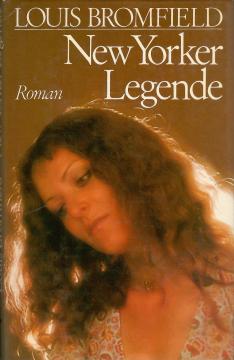
New Yorker Legende
A collection of stories by Louis Bromfield about life, ambition and eccentric characters in 1920s New York. Witty, nostalgic and satirical portrayals of the American metropolis.
New Yorker Legends (the German title for Louis Bromfield's short story collection) features a series of short stories and sketches from New York life in the 1920s, the period when Bromfield was a young writer on the rise. Bromfield (1896–1956), a Pulitzer Prize winner, was working as a journalist and literary critic in New York at the time before moving to a farm in Ohio. The collection reflects his experiences from the Lost Generation – a generation of American writers who lived a turbulent life in the big city.
The stories feature diverse characters: aspiring journalists, eccentric artists, wealthy heirs, immigrants and ordinary New Yorkers. Bromfield masterfully captures the rhythm of the metropolis - speed, chaos, splendor and misery. Some stories are humorous and satirical (criticism of the petty bourgeoisie, false brilliance and the American dream), others are nostalgic and melancholic. The author shows the contrasts of New York: the wealth of Wall Street versus the slums, the glamour of Broadway and the loneliness in the crowd.
The style is typical of Bromfield – lively, dynamic, with rich dialogue and precise descriptions. As a realistic storyteller, he records the details of everyday life: restaurants, theaters, office buildings, parks. The stories often have surprising endings or ironic twists, typical of the American short story tradition (O. Henry, Ring Lardner).
The collection is important because it shows Bromfield before the "ecological phase" at Malabar Farm. In New York he was part of the literary scene, befriending writers such as Scott Fitzgerald and Ernest Hemingway. The stories reflect the spirit of the Roaring Twenties – prosperity, hedonism and hidden crises that would culminate in the Great Depression.
"New Yorker Legends" is an entertaining and always relevant collection: a critique of superficiality, ambition and social masks. Bromfield shows that behind the glitter of big cities are lonely people in search of meaning. The book is a precious document of an era and of Bromfield's early work.
One copy is available