Djela 6: Dojmovi
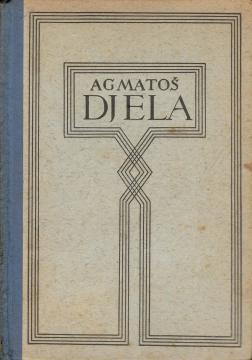
The sixth volume in the 17-volume critical edition of The Works of A. G. Matoš is a collection of literary, cultural and travel impressions, criticism and feuilletons with sharp observations, irony and European horizons.
Like the previous volumes, the literary legacy was collected by Matoš's brother Milan Matoš, and Antun Barac edited the texts according to philological principles — comparison of variants, orthographic adaptation and brief notes on the origin and previous publications. This edition brings together Matoš's impressions — impressions, literary criticism, feuilletons and travel notes, most of which were previously published in magazines.
Impressions present Matoš in the role of an engaged critic and chronicler of his time. The collection contains impressions of literary works, writers, theatre, fine arts, social events and travel impressions from Europe (Paris, Italy, etc.). Matoš writes subjectively, impressively and polemically — his style combines erudition, lyrical sensitivity, irony and sharp criticism. He often opposes provincialism, dilettantism and political petty bourgeoisie, advocating high aesthetic standards and a European orientation of Croatian culture.
The texts reflect Matoš's cosmopolitanism: he compares Croatian conditions with French, German or Russian models, comments on contemporary tendencies (symbolism, decadence, realism) and portrays personalities from cultural life. Impressions are often autobiographically colored — Matoš as a bohemian, emigrant and returnee brings personal reflections on art and life. Epigrammatic sharpness and wit make these texts alive even today.
In the context of Barč's collected edition, the sixth volume builds on the previous prose, essay and lyric volumes, showing Matoš as a complete intellectual: novelist, essayist, travel writer and critic. Impressions are important for understanding his aesthetic program — artistry, modernism and the demand for authentic creativity. Barč's 1938 edition made these scattered texts available in their entirety and preserved them for literary history.
Today, Impressions are valued as a precious document of Croatian modernity: a testament to the cultural struggles of the early 20th century, Matoš's European spirit, and his role as an "awakener" and critic. The collection demonstrates how Matoš elevated literary criticism to the level of an art form — subjective, stylistically brilliant, and intellectually demanding. It is indispensable for the study of Matoš's oeuvre and the broader Croatian cultural history.
One copy is available