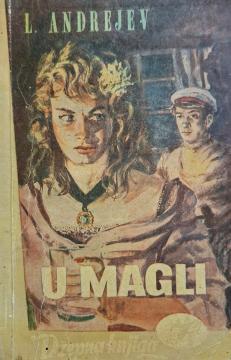
U magli
The story depicts the dark psychological drama of young Pavel, who sinks into a mental fog amidst social taboos and youthful alienation. Andreyev masterfully portrays anxiety, despair, and moral collapse.
The novella In the Fog by the Russian writer Leonid Andreyev—in its 1960 edition—stands as one of the most striking works of early 20th-century expressionist and existentialist prose. The plot follows Pavel, a young high school student grappling with a profound spiritual and moral crisis triggered by sexual awakening, a sense of guilt, and the hypocrisy of a bourgeois society that refuses to openly discuss intimate human needs and the challenges of coming of age. With remarkable psychological insight, Andreyev portrays how inner turmoil, loneliness, and a sense of being misunderstood gradually consume the protagonist, enveloping his consciousness in a metaphorical "fog" of despair. Cut off from family, friends, and society, Pavel is drawn into a spiral of self-destruction that inevitably leads to a tragic conclusion. Because it boldly broached subjects that were taboo at the time, the work sparked heated controversy and scandal upon its release; today, however, it is regarded as a masterpiece of Russian modernist prose. In the Fog conveys a powerful message about the devastating consequences of social taboos and alienation, as well as the urgent need for genuine human understanding and compassion.
One copy is available