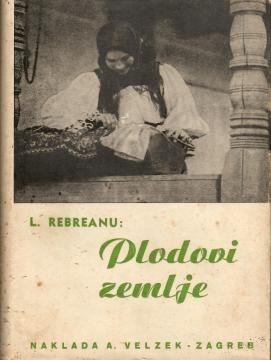
Plodovi zemlje
A masterpiece of Romanian realism (1920; Croatian translation, 1943) about a poor peasant named Ion, whose obsessive hunger for land destroys the lives of those around him and ultimately leads to his own tragic downfall.
The novel "Fruits of the Earth" (Ion—published in Croatian in 1943 in three volumes) is Liviu Rebreanu’s most significant work and a turning point in Romanian literature. Set in the Transylvanian village of Pripas at the beginning of the 20th century, the narrative—characterized by its epic scope and stark realism—depicts the life, customs, and social divisions of a Romanian village under Austro-Hungarian rule. At the center of the story is Ion al Glanetașului, a strong, hardworking, yet impoverished young villager torn between two impulses: the call of the land and the call of love. Although he loves the beautiful but poor Florica, Ion consciously renounces this love; driven by self-interest, he seduces the wealthy but unattractive Ana Baciu to secure her dowry and farmland. After forcing Ana’s father to consent to the marriage, Ion treats his wife with such cruelty and callousness that he drives the unhappy woman to suicide; their child soon dies as well. When Ion finally attempts to return to his true love, Florica—who has since married—he is killed by her jealous husband. Without embellishing or romanticizing peasant life, Rebreanu demonstrates how an obsessive greed for property dehumanizes an individual, transforming the land from a source of life into a fatal destiny.
The book consists of 3 volumes.
Jedan višetomni primjerak je u ponudi.
- Nedostaje ovitak
- The cover is missing
- The cover is missing