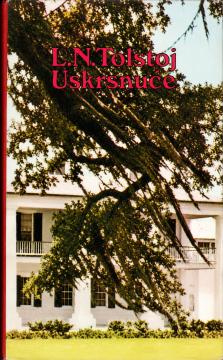
Uskrsnuće

Tolstoy's novel follows Prince Nekhlyudov's moral awakening as he confronts a woman whose life he ruined and seeks redemption through responsibility, compassion, and personal transformation.
Resurrection, published in 1899, is the last major novel by Leo Tolstoy, exploring guilt, conscience, social injustice, and the possibility of spiritual renewal.
Prince Dmitri Nekhlyudov, a member of the Russian aristocracy, serves on a jury and recognizes the defendant, Katerina Maslova, a young woman he seduced and abandoned years earlier. Confronted with the devastating consequences of his actions, he becomes aware of his moral responsibility. His attempt to correct this injustice develops into a profound reassessment of his life and the values of society.
Following Nekhlyudov through courtrooms, prisons, and Russian society, Tolstoy exposes aristocratic hypocrisy, the cruelty of the judicial system, and the contradictions of organized religion. At the same time, he examines the possibility of personal redemption through compassion and responsibility toward others.
This 1980 edition, published by Sveučilišna naklada Liber and translated by Iso Velikanović, belongs to the series Ruski roman u 10 knjiga (The Russian Novel in Ten Volumes). The book concludes with an extensive critical study by Aleksandar Flaker, Tolstojevo »Uskrsnuće«, examining the novel in the context of Tolstoy's literary development, narrative techniques, and social and philosophical ideas.
One copy is available