Ana Karenjina I-II

Ana Karenjina I-II

Lav Nikolajevič Tolstoj
Tolstoj

The novel that Dostoevsky considered flawless and Faulkner called the best novel ever written, is Leo Tolstoy's monumental work that provides a comprehensive account of nineteenth-century Russian society.

The novel "Anna Karenina" was declared the greatest love story of all time, and its author, Count Leo Nikolayevich Tolstoy, the greatest Russian novelist (V. Nabokov). All those who did not read about the adultery and passion of Mrs. Karenina and the free Vronsky did so in a series of film adaptations.

Scholars, critics and fans have sought to answer the question of what makes the love of these two literary characters so special among thousands of others. If there was an answer, Count Tolstoy probably shouldn't even have picked up a pen at his estate in Jasna Poljana. However, one of the answers was that world literature, until then, did not take into account the selfishness and sexuality of love, which, by destroying social conventions, leads to the self-destruction of one or both lovers.

In the great Russian realist novel, Tolstoy started a kind of sexual revolution with "Anna Karenina". In it, a woman, unlike, for example, Flaubert's Emma Bovary, became for the first time a being who has the right to seek physical satisfaction.

Original title
Анна Каренина
Translation
Stjepan Kranjčević
Editor
Željko Ivanjek
Graphics design
Vesna Veselić
Dimensions
21 x 12.5 cm
 
The book consists of two volumes.
Pages total
784
Publisher
Europapress holding, Zagreb, 2010.
 
Latin alphabet. Hardcover with dust jacket.
Language: Croatian.
ISBN
978-9-53300-177-7

No copies available

The last copy was sold recently.
 

Are you interested in another book? You can search the offer using our search engine or browse books by category.

You may also be interested in these titles

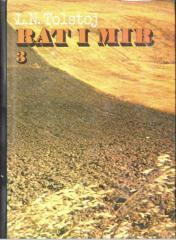
Rat i mir 3

Rat i mir 3

Tolstoj
Lav Nikolajevič Tolstoj
Nakladni zavod Matice hrvatske, 1979.
Croatian. Latin alphabet. Hardcover with dust jacket.
5.98 €
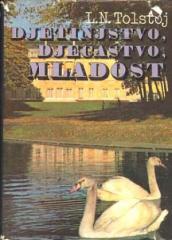
Djetinjstvo / Dječaštvo / Mladost

Djetinjstvo / Dječaštvo / Mladost

Tolstoj
Lav N. Tolstoj

Leo Nikolayevich Tolstoy, in his autobiographical trilogy Childhood (1852), Boyhood (1854), and Youth (1857), follows the growing up of Nikolai Irtenyev, a young nobleman whose experience mirrors Tolstoy's own youth.

Nakladni zavod Matice hrvatske, 1979.
Croatian. Latin alphabet. Hardcover with dust jacket.
5.704.28 €
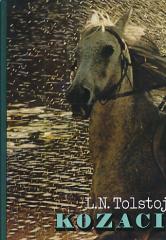
Kozaci

Kozaci

Tolstoj
Lav Nikolajevič Tolstoj

The Cossacks (1863) is a key work in Tolstoy's early work, a bridge between his autobiographical works and his later epics. Inspired by Tolstoy's own experiences in the Caucasus, the work lays the foundation for his critique of civilization.

Nakladni zavod Matice hrvatske, 1979.
Croatian. Latin alphabet. Hardcover with dust jacket.
5.82 €
Gorski car

Gorski car

Svetolik Ranković

In the novel Gorski car, which takes place in the countryside, Ranković also describes an event from his own life: while he was on summer vacation in 1886, bandits attacked his family home and killed his father Pavle, while torturing his mother and others

Džepna knjiga, 1953.
Croatian. Latin alphabet. Paperback.
4.50 €
Seljaci III: Proljeće

Seljaci III: Proljeće

Władysław Stanisław Reymont

The third part of the epic tetralogy The Peasants. Spring brings the awakening of nature, but also new conflicts in the village of Lipce: the culmination of a love triangle, family drama and social tensions. The continuation of Nobel's epic of Polish peas

Matica hrvatska, 1934.
Croatian. Latin alphabet. Hardcover.
7.32 - 23.54 € (set)
Seljaci I: Jesen

Seljaci I: Jesen

Władysław Stanisław Reymont

The first part of an epic tetralogy about the life of a Polish rural community in the village of Lipce. The novel depicts the rhythm of rural work, everyday life, intrigues, conflicts over land and power, and the marriage of the old, wealthy peasant Macie

Matica hrvatska, 1928.
Croatian. Latin alphabet. Hardcover.
23.54 € (set)