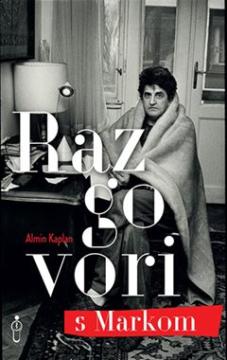
Razgovori s Markom
"Conversations with Marko" by Almin Kaplan is a collection of intimate interviews with the poet Marko Vešović, a great name in Bosnian literature. The poet Marko Vešović symbolizes resistance: a poem against the darkness of war and poverty.
Divided into three cycles, the book follows Vešović's life: childhood in the poor village of Pape in Montenegro (born in 1945, where the mother is a widow with three children after his father was executed as an "enemy of the people"), growing up in Sarajevo, the days of the siege (he survived with his family, becoming a "Sarajevo nationalist" and a traitor in the eyes of the former), and the post-war life of a translator and essayist. Kaplan, born in 1973 in Mostar, a post-war writer who as a teenager survived the HVO camp in Štoec, conducts an equal dialogue, sharing the traumas of the village and the war where only those with the talent for survival or luck survive.
The conversations reveal Vešović as a polemicist and lecturer at the Faculty of Philosophy in Sarajevo: experiences with Nikola Koljević (co-founder of the Academy of Sciences), Abdullah Sidran and Ivor Nog, criticism of Serbian criminal politics in virtuoso essays. Poetry is a bridge between childhood, siege and oblivion – an eternal search for the perfect word, where the city becomes a sluggish routine (“people like traffic signs”), and the village a cruel struggle. Vešović, the author of collections such as “Landscapes” (1973) and translator of almost 50 volumes of world poetry, opens up family wounds: a sense of inferiority, fear of the countryside (“He was afraid of the countryside, and the countryside was afraid of him”), the loss of his wife Gordana. Kaplan plays out the verses, exploring influences (from Mak Dizdar to Celan) and the interpretation of poetry as a refuge from dehumanization.
The book is not just a biography, but a meditation on literature as the only thing that remains: “Poetry has always been on a kind of wait for better times, and the poet remains alone and forgotten.” Praised for its lucidity and emotional depth (Al Jazeera), it inspires reflection on identity in the post-Yugoslav chaos, where language nourishes the spirit against oblivion.
No copies available
The last copy was sold recently.