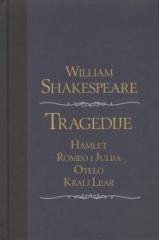
Hamlet
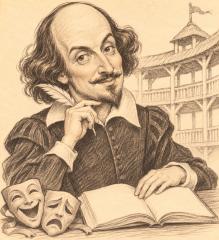
After encountering his father’s ghost, Prince Hamlet investigates a crime behind Denmark’s throne. Shakespeare’s tragedy explores revenge, doubt and conscience as the search for truth threatens the court.
William Shakespeare’s Hamlet is a tragedy of revenge, uncertainty and responsibility for one’s actions. Following the Danish king’s death, his brother Claudius takes the throne and marries Queen Gertrude. Her son Hamlet struggles with his father’s loss and the sudden transformation of his family and country.
A spirit claiming to be his father accuses Claudius of murder and demands revenge. Hamlet seeks confirmation, conceals his intentions behind unsettling behaviour and arranges a theatrical performance designed to expose the king’s conscience. The court becomes a place of surveillance, eavesdropping and mutual suspicion.
Ophelia, her father Polonius, her brother Laertes and Hamlet’s friends are drawn into the conflict. The distinction between appearance and truth grows increasingly uncertain, while the investigation of one crime produces further violence.
Through soliloquies and tense exchanges, Shakespeare examines grief, mortality, betrayal and the cost of revenge. Hamlet’s reflections on life and death accompany an urgent practical question: how should a person act when moral obligations are unclear and every decision may have irreversible consequences?
Two copies are available
Copy number 1
- Yellowed pages