Junak našeg doba

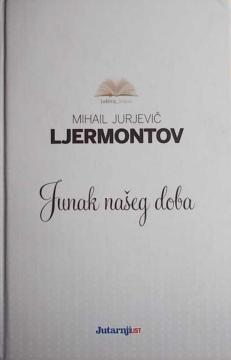
Junak našeg doba

Mihail Jurjevič Ljermontov

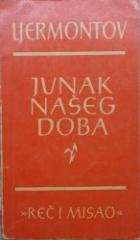
The hero of our time is a novel by the Russian writer Mihail J. Ljermontov, published in 1840. It is considered one of the first psychological novels in Russian literature and an important work of Russian romanticism with elements of realism.

The main character, Pechorin, is a complex and contradictory anti-hero - cynical, intelligent, but also emotionally cold. Through a series of narrative fragments, Ljermontov explores his character and motives. The action is set in the Caucasus, where Pechorin goes through a series of adventures, including duels, love intrigues and existential crises.

The novel is divided into five stories, in which Pechorin is presented from different perspectives: through the narration of his friend, simple captain Maksim Maksimič, about a long-ago event (Bela); from the author's point of view, who tells about a chance meeting with Pechorina (Maksim Maksimič). This is followed by a novel in which the main character narrates in the first person (Tamanj), followed by his diary in which he reveals the secrets of his soul (Kneginjica Meri) and a synthesis of the novel - Pechorin's meditation on fate (Fatalist).

Lermontov criticizes the noble elite, portraying Pechorin as a symbol of a generation of lost idealists who are cynical and incapable of true happiness. The work is significant for its innovative structure, introspective approach and analysis of the human psyche, and Pechorin, the forerunner of the "superfluous man", remains one of the most famous characters in Russian literature.

Original title
Герой нашего времени
Translation
Milan Bogdanović
Editor
Ivica Buljan
Graphics design
Halid Malla
Dimensions
20 x 13 cm
Pages
142
Publisher
Jutarnji list, Zagreb, 2008.
 
Latin alphabet. Hardcover.
Language: Croatian.
ISBN
978-9-53300-058-9

Multiple copies are available

Copy number 1

Condition:Used, excellent condition

Copy number 2

Condition:Used, excellent condition

Copy number 3

Condition:Used, excellent condition

Copy number 4

Condition:Used, excellent condition
 

Are you interested in another book? You can search the offer using our search engine or browse books by category.

You may also be interested in these titles

Junak našeg doba

Junak našeg doba

Mihail Jurjevič Ljermontov
Rad, 1962.
Serbian. Latin alphabet. Paperback.
1.99
Junak našega doba

Junak našega doba

Mihail Jurjevič Ljermontov

A Hero of Our Time is a novel by Russian writer Mikhail Y. Lermontov, published in 1840. It is considered one of the first psychological novels in Russian literature and an important work of Russian Romanticism with elements of realism.

Nakladni zavod Matice hrvatske, 1947.
Croatian. Latin alphabet. Hardcover.
5.98
Rudnik čvaraka

Rudnik čvaraka

Tomislav Šovagović

The debut work of Croatian writer Tomislav Šovagović, awarded the Josip and Ivan Kozarac Award in 2012, is a dedication to Slavonia – the region of his childhood that the author, born in Dalmatia, observes with foreign but tender eyes.

Mozaik knjiga, 20112.
Croatian. Latin alphabet. Paperback.
11.56
Andrićeva lestvica užasa

Andrićeva lestvica užasa

Svetislav Basara

A Serbian writer known for his satirical novels, Andrić's Ladder of Horrors dissects the Balkan mentality through a parable of Yugo-nostalgia and national myths. The title alludes to Ivo Andrić as a litmus test for criticism – Balkans claim him or reject

24 sata, 2021.
Serbian. Latin alphabet. Paperback.
11.56
Stotina godina (antikronika)

Stotina godina (antikronika)

Dario Harjaček

The novel One Hundred Years by Dario Harjaček provides a panoramic view of Trešnjevka and its inhabitants through a century of changes, ideologies, and human destinies – a mosaic of Zagreb in which life, art, and history intertwine.

Oceanmore, 2025.
Croatian. Latin alphabet. Paperback.
13.42
Zagrepčanka

Zagrepčanka

Branislav Glumac

Branislav Glumac published a novel without periods or commas in 1974, as the relentless stream of thought of a young rebel. Published in socialist Yugoslavia, the work caused a scandal with its openness and became a classic about generational rebellion.

IROS, 1986.
Croatian. Latin alphabet. Hardcover.
8.22 - 8.24