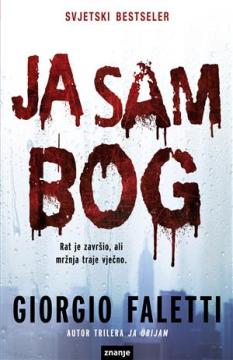
Ja sam bog

Ja sam bog

Giorgio Faletti
Original title
Io sono dio
Translation
Mate Maras
Editor
Tomislav Zagoda
Graphics design
Janka Carev
Dimensions
19 x 12 cm
Pages
403
Publisher
Znanje, Zagreb, 2011.
 
Latin alphabet. Paperback.
Language: Croatian.

No copies available

The last copy was sold recently.
 

Are you interested in another book? You can search the offer using our search engine or browse books by category.

You may also be interested in these titles

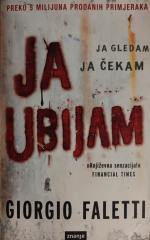
Ja ubijam

Ja ubijam

Giorgio Faletti
Znanje, 2011.
Croatian. Latin alphabet. Paperback.
3.98
Ravnodušni ljudi

Ravnodušni ljudi

Alberto Moravia

The novel follows the declining Roman bourgeois family of Ardengo over the course of several days: widow Mariagrazia, lover Leo, son Michele, and daughter Carla – all trapped in apathy, lies, sexual manipulation, and moral indifference.

Otokar Keršovani, 1966.
Croatian. Latin alphabet. Hardcover.
3.22
Svetlosti Rima

Svetlosti Rima

Alberto Moravia

Through these stories, Moravia explores themes of social inequality, the struggle for survival, and human frailty, portraying them with a mix of humor, irony, and realistic observation.

Svjetlost, 1965.
Serbian. Latin alphabet. Paperback.
3.82 - 3.92
Dani zaborava

Dani zaborava

Elena Ferrante

Days of Forgetting (2002), a novel by Italian mystery writer Elena Ferrante, delves into the depths of a woman's psyche through a story of sudden abandonment. For readers seeking a mirror in pain – a novel about the fall and rise of a woman in solitude.

Profil Knjiga, 2015.
Croatian. Latin alphabet. Paperback.
12.35 - 12.36
Djevojka s Leicom

Djevojka s Leicom

Helena Janeczek

The novel is a kaleidoscopic, polyphonic account of the life of Gerda Taro (née Gerda Pohorylle, 1910–1937), the first female war photographer to die on the battlefield. A must-read for fans of historical fiction about strong women and anti-fascism.

Naklada Ljevak, 2020.
Croatian. Latin alphabet. Hardcover with dust jacket.
13.72
U sjeni bregova

U sjeni bregova

Paola Drigo

The novel depicts the tragic fate of Mariuta (Marije Zef) and her younger sister Rosuta. The work shocked contemporaries with its boldness in depicting taboo subjects, and is today considered a classic portrait of female suffering in rural Italy.

Matica hrvatska, 1961.
Croatian. Latin alphabet. Hardcover with dust jacket.
5.323.72