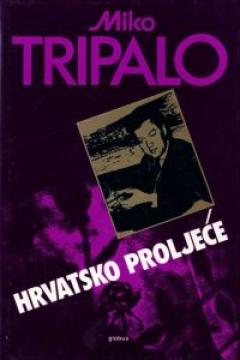
Hrvatsko proljeće

Hrvatsko proljeće

Miko Tripalo

The Croatian Spring is not only a chronicle of the events of 1971, but also a suggestive presentation of the political conditions of Yugoslavia in the post-war period. These testimonies come from the pen of a man who really tried to break the shackles of

Miko Tripalo particularly sheds light on the political processes from the mid-sixties to the events that led to the open split in SKH, and in the epilogue he reflects on the historical lessons from the whole event, relevant for the future of Croatia and Yugoslavia. The Croatian Spring shows how the KP became the actor in socialism that brought the system's controversies to the limits of absurdity, and to the gap between ideals, norms and reality itself, and how real contradictions became the germ of its own downfall. Through Tripalo's analysis of government and power relations, through expulsions and sufferings, we get to know directly the power of dogmatism, the orchestration of the press, the police and the army. The Croatian Spring reveals the true nature of the movement in 1971, its evolutionary and not revolutionary character, its pluralistic and not monistic organization.

Editor
Almka Kralj Štih
Graphics design
Bronislav Fajon
Dimensions
24 x 16 cm
Pages
265
Publisher
Globus, Zagreb, 1990.
 
Latin alphabet. Hardcover with dust jacket.
Language: Croatian.
ISBN
8-63-430599-6

One copy is available

Condition:Used, excellent condition
Discounted price: 11.588.11
30% discount is valid until 3/28/26 11:59 pm
 

Are you interested in another book? You can search the offer using our search engine or browse books by category.

You may also be interested in these titles

Pazin

Pazin

Petar Strčić

Pazin is a town in central Istria, known for its rich history and natural beauty. It is located above the karst abyss of Pazinska jama, into which the river Pazinčica plunges.

Skupština općine Pazin, 1982.
Croatian. Latin alphabet. Hardcover with dust jacket.
15.62
Komunizam i čovjek: Odnos vlasti i pojedinca u Hrvatskoj (1958.–1972.)

Komunizam i čovjek: Odnos vlasti i pojedinca u Hrvatskoj (1958.–1972.)

Josip Mihaljević

Josip Mihaljević's book analyzes the relationship between the government and the individual in communist Croatia (1958–1972), through repressive mechanisms, ideological pressures, and restrictions on personal freedom in the socialist system.

Hrvatski institut za povijest, 2016.
Croatian. Latin alphabet. Hardcover.
17.26
Osječka groblja

Osječka groblja

Stjepan Sršan

The book is deeply rooted in the local history and culture of Osijek, with an emphasis on cemetery motifs that serve as a metaphor for memory, death, and disappearance.

Povijesni arhiv u Osijeku, 1996.
Croatian. Latin alphabet. Paperback.
5.26
Družtvo slavonskih liečnika u Osieku : kronologija osnutka, uloga i djelovanje, 1874. - 1883.

Družtvo slavonskih liečnika u Osieku : kronologija osnutka, uloga i djelovanje, 1874. - 1883.

Biserka Belicza, Antun Tucak

Shaping of the doctor's professional identity in the second half of the 19th century resulted in the establishment of the Society Slavonian doctors in Osijek in 1874.

Hrvatski liječnički zbor, 2009.
Croatian. Latin alphabet. Hardcover.
6.86 - 6.98
Vukovarsko vlastelinstvo 1719. – 1945.- sumarni inventar

Vukovarsko vlastelinstvo 1719. – 1945.- sumarni inventar

Stjepan Sršan
Državni arhiv u Osijeku, 2008.
Croatian. Latin alphabet. Paperback.
10.387.79
Povijest Slavonije u sedam požara

Povijest Slavonije u sedam požara

Stanko Andrić
SCPRESS, 1992.
Croatian. Latin alphabet. Paperback.
12.48