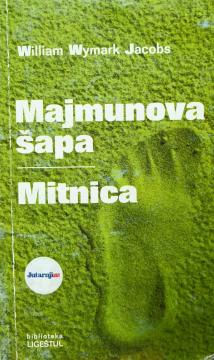
Majmunova šapa / Mitnica
U Majmunovoj šapi stari par dobiva magičnu šapu koja ispunjava želje, ali po užasnoj cijeni. U Mitnici četiri prijatelja noće u ukletoj kući koja uzima „cestarinu“ – jedan život po noći. Dvije klasične priče strave W.W. Jacobsa o sudbini i natprirodnom.
William Wymark Jacobs (1863.–1943.), engleski pisac poznat po humorističkim pomorskim pričama, ostao je besmrtan zahvaljujući dvjema majstorskim horor pričama: Majmunova šapa (The Monkey’s Paw, 1902.) i Mitnica (The Toll-House, 1909.).
Majmunova šapa najpoznatija je i najutjecajnija. Radnja se odvija u maloj engleskoj kućici gdje žive stariji bračni par Whiteovi i njihov sin Herbert. Jedne večeri dolazi im stari prijatelj, narednik Morris, koji im donosi osušenu majmunovu šapu – talisman iz Indije koji navodno ispunjava tri želje, ali uvijek na strašan, izopačen način. Unatoč upozorenjima, gospodin White poželi novac. Sljedećeg dana dolazi vijest da je njihov sin Herbert poginuo u tvornici, a tvrtka im isplaćuje točno željenu svotu kao odštetu. U očaju majka poželi da se sin vrati, a ubrzo se začuje kucanje na vratima...
Jacobs majstorski gradi napetost kroz svakodnevni realizam i postupno otkrivanje užasa. Priča je savršena parabola o opasnostima igranja s nepoznatim silama, pohlepi i nemoći pred sudbinom. Postala je klasik svjetske književnosti, više puta dramatizirana, ekranizirana i inspirirala brojne autore.
Mitnica (The Toll-House) druga je remek-priča istog autora. Četiri mlada skeptična prijatelja – Barnes, Meagle, Lester i White – tijekom pješačkog putovanja odluče noćiti u napuštenoj kući zlog glasa. Lokalna legenda kaže da Mitnica uzima cestarinu – jedan život svaki put kad netko prenoći u njoj. Unatoč pričama o prethodnim žrtvama (uključujući skitnicu koji je pronađen obješen), mladići se klade i ulaze. Noć prolazi uz sve veću nelagodu: čuju se koraci, vrata se sama otvaraju, dvojica padaju u neobjašnjiv san... Ujutro otkrivaju užasnu istinu. Jacobs ovdje ne koristi vidljivo natprirodno biće, već atmosferu, sugestiju i psihološku napetost. Priča briljantno prikazuje sukob skepticizma i nepoznatog, kao i posljedice ljudske bahatosti.
Obje priče dijele Jacobsov prepoznatljiv stil: ekonomičan, realističan prozni jezik, crni humor i postupno pojačavanje jeze bez pretjeranog opisivanja. Umjesto grafičkog nasilja, strah dolazi iz svakodnevice koja se polako izvrće. Majmunova šapa naglašava fatalizam i cijenu želja, dok Mitnica istražuje strah od nepoznatog i moć sugestije. Zajedno predstavljaju vrhunac engleske kratke horor proze početkom 20. stoljeća i utjecale su na autore poput Lovecrafta i kasnije horor tradiciju. Ove Jacobsove priče su obavezno štivo za ljubitelje klasične strave – kratke, precizne i duboko uznemirujuće.
Jedan primjerak je u ponudi