Kršćanstvo prije Krista?

Kršćanstvo prije Krista?

Eugen Werber

"Qumran writings" or "Dead Sea Scrolls" represent one of the greatest discoveries of the 20th century, which lead to the revision of some overly simplified atheistic understandings.

In the spring of 1947, an incredible discovery took place in the area of ​​Qumran (on the northwestern shore of the Dead Sea). As in one of the Eastern stories, a young shepherd, looking for sheep, came to the entrance to an unknown cave. When his eyes adjusted to the darkness, he realized that there were carefully arranged jars in front of him. The first thing that came to his mind was that there might be a hidden treasure in them, gold that would ensure a comfortable future for him. But after he opened some of the jars, his disappointment was endless. None of the great wealth he dreamed of, just old writings full of dust. It was a historic discovery that would soon cause a world sensation and start many controversies. The first seven scrolls found by the shepherds soon ended up at the Hebrew University in Jerusalem, and excited scientists from all over the world flocked to Qumran and began exploring the other surrounding caves.

After the Qumran commentaries on the book of the prophet Habakkuk and after the Rulebook of Communion, it is difficult to claim that the gospels are a mere fabrication from a historical point of view and that there never was such a historical figure as Jesus Christ, because there are no reliable documents from that time. Today we have undoubtedly authentic documents that as early as the first century before our era, the leaders of a small sect called the Teachers of Righteousness lived on the shores of the Dead Sea, who had their own special ideas about God and religion, and were constantly in conflict with the central institutions of the Jewish faith in Jerusalem . Is it difficult to assume that one of those Teachers, or perhaps one of their successors, came to Jerusalem itself to experience something of the fate described in the Gospels?

Urednik
Slavko Goldstein
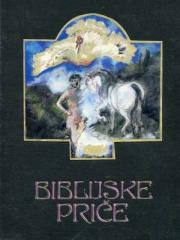
Naslovnica
Josip Vaništa
Dimenzije
20 x 14 cm
Broj strana
238
Nakladnik
Liber, Rijeka, 1972.
 
Latinica. Tvrde korice s ovitkom.
Jezik: Hrvatski.

Jedan primjerak je u ponudi

Stanje:Korišteno, u odličnom stanju
Dodano u košaricu!
 

Zanima Vas i neka druga knjiga? Možete pretražiti našu ponudu pomoću tražilice ili prelistati knjige po kategorijama.

Možda će Vas zanimati i ovi naslovi

Biblijske priče

Biblijske priče

Eugen Werber
Cankarjeva založba, 1988.
Hrvatski. Latinica. Tvrde korice.
9,99
Povijest svjetske književnosti 1

Povijest svjetske književnosti 1

Svetozar Petrović, Erica Reiner, Eugen Werber, Marija Đukanović, Rade Božović, Rada Iveković, Sve...

The first volume covers the classical literatures of the Middle East, as well as Indian, Chinese, Japanese, and Persian literature, along with Arabic and other Asian traditions. It systematically presents their origins, development, and key texts.

Mladost, 1982.
Hrvatski. Latinica. Tvrde korice.
12,34
Riječi razboritosti za um, tijelo i dušu

Riječi razboritosti za um, tijelo i dušu

David Steindl-Rast

Prudence is a sense of community, an awareness that we discover who and what we are through relationships, not only with people but with everything that exists.

Mozaik knjiga, 2005.
Hrvatski. Latinica. Tvrde korice.
4,68
Pisma starijeg đavla mlađem

Pisma starijeg đavla mlađem

C. S. Lewis
Verbum, 1999.
Hrvatski. Latinica. Tvrde korice.
9,58
Poruka nade

Poruka nade

Ellen Gould White

Each of us can reach a point in life when we need hope.

Znaci vremena, 2017.
Hrvatski. Latinica. Broširano.
3,98
Današnji čovjek pred Biblijom

Današnji čovjek pred Biblijom

Luis Alonso Schökel

This booklet was written at a time of very strong and turbulent turmoil in the field of biblical research, that is, at a time of a new direction in the biblical movement.

Kršćanska sadašnjost, 1994.
Hrvatski. Latinica. Broširano.
2,98