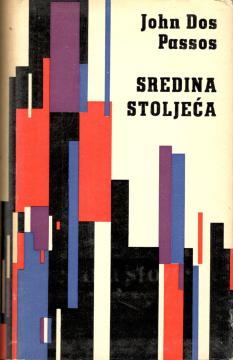
Sredina stoljeća

Sredina stoljeća

John Dos Passos

The novel "Midcentury" by John Dos Passos depicts America after World War II through the stories of entrepreneurs, workers, and politicians, revealing conflicts between capital and labor, corruption, and the struggle for power.

The novel Midcentury by John Dos Passos depicts American society after World War II, during the beginning of the Cold War, rapid industrialization, and major conflicts between capital, politics, and the labor movement. The work is written as a broad social chronicle in which fictional characters' fates and real historical events are intertwined.

One of the main plots follows Lomax, an old labor activist who recalls the struggles of the unions and the changes that the American labor movement has undergone. Another important story is related to Milliron, a representative of the business world, and his son-in-law Jenks, a young entrepreneur who is trying to start his own taxi company in the city of Duquesne. His conflict with an existing taxi company develops into a struggle marked by pressures, political connections, violence, and corruption.

Through the fates of these characters, Dos Passos shows how ordinary people become victims of great social forces. At the same time, he includes depictions of real people such as politicians, military commanders, and industrialists in the novel, thus connecting private lives with historical events.

The author uses his distinctive documentary style: he intersperses newspaper reports, biographical sketches, and commentary on social events with the narrative. The novel criticizes greed, abuse of power, and the loss of human values ​​in modern society, but at the same time emphasizes the importance of solidarity, love, and personal dignity.

Naslov izvornika
Midcentury
Prijevod
Ljerka Radović
Dimenzije
21 x 13 cm
Broj strana
539
Nakladnik
Naprijed, Zagreb, 1965.
 
Latinica. Tvrde korice s ovitkom.
Jezik: Hrvatski.

Više primjeraka je u ponudi

Primjerak broj 1

Stanje:Korišteno, u odličnom stanju
Dodano u košaricu!

Primjerak broj 2

Stanje:Korišteno, u dobrom stanju (tragovi korištenja)
Oštećenja / nepogodnosti:
  • Yellowed pages
  • Slight damage to the dust jacket
Dodano u košaricu!

Primjerak broj 3

Stanje:Korišteno, u vrlo dobrom stanju
Oštećenja / nepogodnosti:
  • The cover is missing
Dodano u košaricu!
 

Zanima Vas i neka druga knjiga? Možete pretražiti našu ponudu pomoću tražilice ili prelistati knjige po kategorijama.

Možda će Vas zanimati i ovi naslovi

Manhattan Transfer

Manhattan Transfer

John Dos Passos

John Dos Passos' novel, published in 1925, focuses on the development of urban life in New York City from the Gilded Age to the Jazz Age, told through a series of overlapping individual stories. It is considered one of Dos Passos's most important works.

Sveučilišna naklada Liber (SNL), 1978.
Hrvatski. Latinica. Tvrde korice s ovitkom.
5,42 €
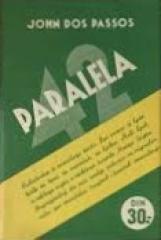
42 paralela I-II

42 paralela I-II

John Dos Passos

The first part of the epic trilogy U.S.A. John Dos Passos. A mosaic of the fate of ordinary Americans in the period from 1900 to the First World War – ambition, struggle for survival, social unrest and the birth of modern America.

Hrvatska književna naklada neovisnih književnika, 1939.
Hrvatski. Latinica. Tvrde korice s ovitkom.
4,38 €
Zločin

Zločin

Ivan Potrč

Crime (1955) by Ivan Potrč is a historical novella that focuses on the last days of communist illegals Đuro Đaković and Nikola Hećimović, key figures of the Communist Party of Yugoslavia in the period between the two world wars.

Svjetlost, 1982.
Hrvatski. Latinica. Tvrde korice.
4,28 €
Kako stoje stvari: Predavanje održano u Domu JNA u Zagrebu 17. 12. 1952.

Kako stoje stvari: Predavanje održano u Domu JNA u Zagrebu 17. 12. 1952.

Miroslav Krleža

In his lecture How Things Are (1952), Krleža discusses the political and cultural situation of post-war Yugoslavia, emphasizing the need for critical thought, cultural renewal, and resistance to dogmatism.

Zora, 1953.
Hrvatski. Latinica. Broširano.
12,48 €
Pisma Cosimu I. Mediciju 1566.

Pisma Cosimu I. Mediciju 1566.

Marin Držić

Držić's letters to Cosimo I de' Medici represent a significant document of Croatian Renaissance literature and history. Držić sent three letters to Cosimo I, Grand Duke of Tuscany, between June and August 1566, while he was staying in Florence.

Croatian P.E.N. Centre & Most / The Bridge, 1993.
Hrvatski. Latinica. Broširano.
8,326,66 €
Love, Africa: A Memoir of Romance, War, and Survival

Love, Africa: A Memoir of Romance, War, and Survival

Jeffrey Gettleman

From Jeffrey Gettleman, a Pulitzer Prize-winning New York Times journalist, comes a passionate, revealing story about finding love and finding a calling, set against one of the most turbulent regions in the world.

HarperCollins Publishers, 2017.
Engleski. Latinica. Tvrde korice s ovitkom.
17,34 €