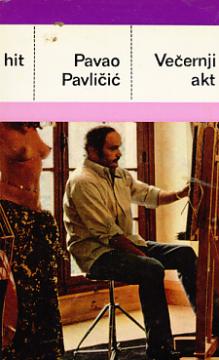
Večernji akt

Večernji akt

Pavao Pavličić

The story, centered on the brilliant forger Mihovil, criticizes the literature and art of our time. It also reflects on a society that is ready to adapt the coordinates of history to its own needs.

Mihovil, a student at the Academy of Fine Arts, lives with his grandmother on Medvedgradska Street and has an extraordinary ability to perfect forgeries – from banknotes and paintings to manuscripts and objects. His talent is revealed when he pays in a shop with a counterfeit banknote, which goes unnoticed, and his friend Zoran and the painter Kolarić recognize the genius of his copies, such as a perfect replica of Stančić’s painting. Mihovil’s skill attracts the attention of various circles – from artistic to criminal and political – which leads to a series of dramatic events. As the plot progresses, Mihovil’s forgeries become increasingly fantastic: he copies letters from Antun Gustav Matoš, plants, and even reality, creating alternative worlds, such as a fake Zagreb. His ability raises moral questions – does his forgery change reality or is it just a reflection of the relativity of truth? The authorities persecute him, considering him a threat, while he himself escapes persecution by transforming himself into the old man Bartol Mihetec. The novel culminates when Mihovil, in a new identity, begins writing a work that begins with the same sentence as "Evening Nude", hinting at cyclicality and self-referentiality.

Urednik
Zlatko Crnković
Naslovnica
Alfred Pal
Dimenzije
19,5 x 12 cm
Broj strana
294
Nakladnik
Znanje, Zagreb, 1981.
 
Latinica. Tvrde korice s ovitkom.
Jezik: Hrvatski.

Jedan primjerak je u ponudi

Stanje:Korišteno, u vrlo dobrom stanju
Oštećenja / nepogodnosti:
  • Slight damage to the dust jacket
Dodano u košaricu!
 

Zanima Vas i neka druga knjiga? Možete pretražiti našu ponudu pomoću tražilice ili prelistati knjige po kategorijama.

Možda će Vas zanimati i ovi naslovi

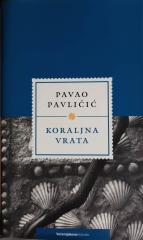
Koraljna vrata

Koraljna vrata

Pavao Pavličić

How to persuade high school students to read Gundulić's Osman? The question is difficult, but the answer is simple. So that they read Pavličić before Gundulić.

Večernji list, 2004.
Hrvatski. Latinica. Tvrde korice s ovitkom.
3,26 - 4,78
Eter

Eter

Pavao Pavličić
Znanje, 1983.
Hrvatski. Latinica. Tvrde korice.
4,99
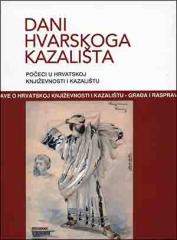
Dani hvarskog kazališta. Počeci u hrvatskoj književnosti i kazalištu

Dani hvarskog kazališta. Počeci u hrvatskoj književnosti i kazalištu

Maja Bošković Stuli, Dunja Fališevac, Milovan Tatarin, Lahorka Plejić Poje, Pavao Pavličić, Helen...
Hrvatska akademija znanosti i umjetnosti (HAZU), 2008.
Hrvatski. Latinica. Broširano.
9,99
Deobe

Deobe

Dobrica Ćosić

„Deobe“ ist ein Roman über die tragische Spaltung der Serben in Tschetniks und Partisanen während des Zweiten Weltkriegs. Der mit dem NIN-Preis ausgezeichnete Roman ist Teil einer größeren epischen Trilogie, die von Ćosićs Erfahrungen und historischen Dok

Prosveta, 1963.
Hrvatski. Latinica. Tvrde korice s ovitkom.
13,74
Ulazeći u Varcar

Ulazeći u Varcar

Ivan Lovrenović

Das Hybridwerk – Roman, Gedicht und Essay in einem – ist eine Widmung an seinen Geburtsort Varcar, ein kleines Dorf in Zentralbosnien, wo sich die Wurzeln des Autors mit der Geschichte, den Mythen und dem Chaos des 20. Jahrhunderts verflechten.

Fraktura, 2016.
Hrvatski. Latinica. Tvrde korice s ovitkom.
14,42
Stotina godina (antikronika)

Stotina godina (antikronika)

Dario Harjaček

Der Roman „Hundert Jahre“ von Dario Harjaček bietet einen Panoramablick auf Trešnjevka und seine Bewohner im Laufe eines Jahrhunderts voller Veränderungen, Ideologien und menschlicher Schicksale – ein Mosaik von Zagreb, in dem Leben, Kunst und Geschichte

Oceanmore, 2025.
Hrvatski. Latinica. Broširano.
13,42