Sretan cvrčak

Sretan cvrčak

Nada Zidar-Bogadi

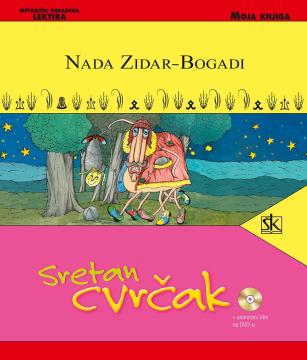
In the story The Happy Cricket, a cheerful cricket lives carefree, happy in song and play, while hardworking ants remind him to work. The story teaches that true wealth lies in cheerfulness, joy, and an honest outlook on life.

The Happy Cricket by Nada Zidar-Bogadi is a warm, educational story for children that conveys an important message about the joy of life, work, and mutual understanding through a simple plot. The main character is a cricket who spends his days singing and rejoicing, satisfied with what he has and the beauty of the moment. His neighbors, the hardworking ants, look at him with disapproval because they believe that time should be spent working and gathering supplies.

When autumn comes, the ants have a ready home and food, and the cricket is left alone in November. However, he does not lose his optimism even then – his song is warmed by hope and cheerfulness of spirit. At the end of the story, the ants realize that work without joy and friendship is not true wealth, and the cricket learns to appreciate effort and responsibility.

Through this simple, fairy-tale tale, the author combines entertainment and a moral lesson. The character of the cricket symbolizes the cheerfulness of life and freedom of spirit, while the ants represent diligence and prudence.

The message of the story is not one-sided: happiness is not just about work or just about pleasure — the true balance is found in the combination of both, in the harmony between work, friendship, and the joy of life.

Urednik
Miroslava Vučić
Ilustracije
Pika Vončina
Dimenzije
20,5 x 17,5 cm
Broj strana
200
Nakladnik
Školska knjiga, Zagreb, 2024.
 
Latinica. Tvrde korice.
Jezik: Hrvatski.

Jedan primjerak je u ponudi

Stanje:Korišteno, u odličnom stanju
Dodano u košaricu!
 

Zanima Vas i neka druga knjiga? Možete pretražiti našu ponudu pomoću tražilice ili prelistati knjige po kategorijama.

Možda će Vas zanimati i ovi naslovi

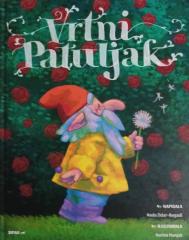
Vrtni patuljak

Vrtni patuljak

Nada Zidar-Bogadi

This is a story about a little girl and her growing up, and about love, friendship, renunciation and loyalty of a garden gnome, of which there are quite a few in the city.

Sipar, 2017.
Hrvatski. Latinica. Tvrde korice.
5,98
Priče iz davnine

Priče iz davnine

Ivana Brlić-Mažuranić

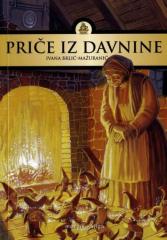
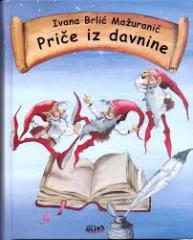
"Stories from the Past" (1916) contains the stories: Sunce Djever and Neva Nevičica, Bratac Jaglenac and little sister Rutvica, Šuma Striborova, How Potjeh searched for the truth, Fisherman Polunko and his wife, Lutonjica Toporko and nine župančići, Jagor

Mozaik knjiga, 2001.
Hrvatski. Latinica. Tvrde korice.
9,42
Priče iz davnine

Priče iz davnine

Ivana Brlić-Mažuranić

A collection of eight artistic fairy tales for children, inspired by Slavic mythology and folk tales, depicting the struggle between good and evil, wisdom, obedience, love and moral lessons through fantastic characters.

Nakladni zavod Matice hrvatske, 1980.
Hrvatski. Latinica. Broširano.
7,32
Kralj Betajnove

Kralj Betajnove

Ivan Cankar

The King of Betajnove is a play by Slovenian writer Ivan Cankar, first performed in 1902. The plot depicts moral and social decadence through the character of Matije Bertoncelj, a wealthy industrialist and the main villain, known as the "King of Betajnove

Školska knjiga, 1989.
Hrvatski. Latinica. Tvrde korice.
2,98 - 3,60
Kako smo lomili noge

Kako smo lomili noge

Miro Gavran

The novel How We Broke Our Legs (1997), a humorous and tender chronicle of family life through four decades of Croatian history, follows the fate of three generations of a Slavonian family from 1951 to 1992.

Mozaik knjiga, 2007.
Hrvatski. Latinica. Broširano.
9,36
Smrt Smail-age Čengijića

Smrt Smail-age Čengijića

Ivan Mažuranić
Školska knjiga, 1958.
Hrvatski. Latinica. Broširano.
0,98