Bistri vitez Don Quijote od Manche
Alonso Quijano, obsessed with chivalric novels, becomes Don Quixote de la Mancha. With his faithful Sancho Panza, he embarks on crazy adventures, fighting windmills and dreaming of the ideal Dulcinea.
Don Quixote de la Mancha (first part 1605, second 1615) is considered the first modern novel and one of the most important works of world literature. The novel began as a parody of popular chivalric novels, but grew into a deep, layered tale of idealism, madness, imagination, and the conflict between dreams and reality.
The main character is Alonso Quijano, a poor fifty-year-old nobleman (hidalgo) from La Mancha. After reading too much knightly books he goes mad and decides to become a knight errant. He takes the name Don Quixote de la Mancha, transforms the old man into a horse Rocinante, idealizes his neighbor Aldonza Lorenzo into a beautiful lady of the heart Dulcinea del Toboso, and persuades the ordinary peasant Sancho Panza to be his squire, promising him the rule of the island.
In the first part, we follow their comic and tragic adventures: Don Quixote attacks windmills believing them to be giants, frees a group of prisoners, fights a herd of rams, enters inns he thinks are castles and is constantly beaten and humiliated. Sancho Panza, full of folk wisdom, represents a realistic, down-to-earth view of the world and often tries to reason with his master.
The second part is even more refined and metatextual. The heroes are already known from the first part, so the other characters deliberately lead them into new adventures for fun. Cervantes also deals with the fake sequel of his novel that someone published.
The work ingeniously combines humor, irony, philosophy and sharp social criticism of the Spanish society of the 17th century. Don Quixote embodies a noble but naive idealist ready to fight for justice and love, while Sancho represents a pragmatist and realist. Finally, on his deathbed, Quijano renounces his knightly identity and dies a prudent man. But precisely his "madness" becomes a symbol of human aspiration for a better, more just world.
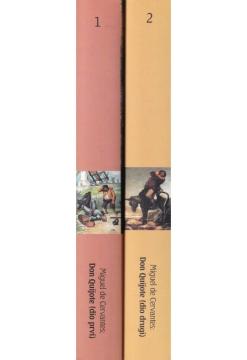
Knjiga se sastoji od dva toma.
Više primjeraka je u ponudi.
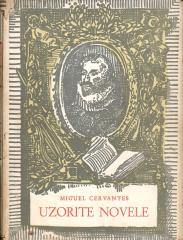
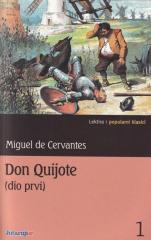
Primjerak broj 1
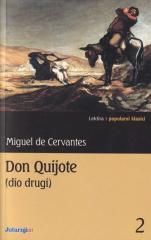
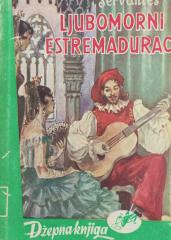
Primjerak broj 2
Primjerak broj 3
Jedan primjerak je u ponudi