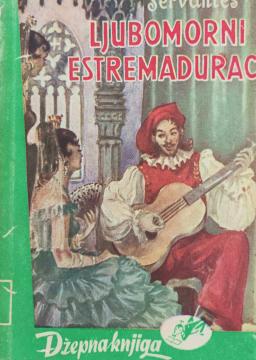
Ljubomorni Estremadurac

Ljubomorni Estremadurac

Miguel de Cervantes

The Jealous Extremaduran is a dark, psychological tale about the destructive power of jealousy. The novel is a satire on possessiveness, fear of women's freedom, and the illusion that happiness can be "locked in." One of Cervantes' most poignant "exemplar

Filipo de Carrizales, an elderly wealthy man from Extremadura, squanders his wealth in Spain in his youth, flees to the New World (Peru), where he makes a fortune over the course of 20 years, and returns to Seville as an "indiano" at the age of 68. Obsessed with the fear of infidelity (due to his own past and old age), he decides to marry - but only to a virgin whom he will be able to completely control.

He finds 13-year-old Leonora, a poor, beautiful and innocent girl from a noble family. After marrying her, he builds a fortress-like house with no windows facing the street, with high walls and a single door guarded by a black slave (eunuch) named Loaysa. He locks his young wife in a house with maids and old women, forbids her to go out, talk to men, and even look out the window - all to prevent possible deception.

But fate plays tricks: the young musician and thief Loaysa (not a eunuch, but a street hustler) enters the house, seduces the maids and Leonora. On a night of orgy and dancing, Loaysa enters Leonora's room. She rejects him, but Carrizales finds them in a compromising position (although full-blown adultery has not occurred). The old man, devastated by jealousy and shame, dies of a heart attack.

On his deathbed, he forgives Leonora (who remains innocent at heart), but she, devastated by guilt and grief, dies a few days later in a convent.

Original title
El celoso extremeño
Translation
H. Alkalaj
Editor
Miodrag Bogićević
Graphics design
Olivera Bravačić
Dimensions
16.5 x 12 cm
Pages
174
Publisher
Džepna knjiga, Sarajevo, 1957.
 
Latin alphabet. Paperback.
Language: Croatian.

One copy is available

Condition:Used, excellent condition
Damages or inconvenience notice:
  • Traces of patina
 

Are you interested in another book? You can search the offer using our search engine or browse books by category.

You may also be interested in these titles

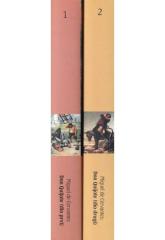
Bistri vitez Don Quijote od Manche

Bistri vitez Don Quijote od Manche

Miguel de Cervantes
Globus, 2004.
Croatian. Latin alphabet. Paperback.
The book consists of two volumes
4.22
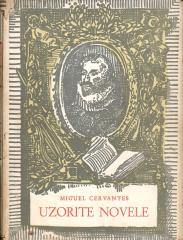
Uzorite novele: izbor

Uzorite novele: izbor

Miguel de Cervantes

The collection of twelve stories was written, in the words of the author, to entertain and educate. There are love affairs, duels, poisoning, scenes from vagabond and gypsy life, irresistibly realistic descriptions of the Lupe underground.

Novo pokoljenje, 1949.
Croatian. Latin alphabet. Hardcover with dust jacket.
4.99 - 11.24
Slavonijo, zemljo plemenita: Izabrana proza

Slavonijo, zemljo plemenita: Izabrana proza

Josip Kozarac, Ivan Kozarac, Jozo Ivakić

The collection brings together the works of three prominent Slavonian authors: Josip Kozarac, Ivan Kozarac, and Jozo Ivakić. The anthology provides an in-depth insight into the cultural and social life of Slavonia in the late 19th and early 20th centuries

Spektar, 1974.
Croatian. Latin alphabet. Hardcover.
4.62
Ljudi i zemlja

Ljudi i zemlja

Fran Erjavec, Janko Kersnik, Alojz Kraigher, Janez Jalen, Prežihov Voranc, Matevž Hace, Ferdo Godina

A collection of stories with peasant themes, selected by Franček Bohanec.

Spektar, 1974.
Croatian. Latin alphabet. Hardcover.
3.68
Zrnca pijeska na obalama vječnosti

Zrnca pijeska na obalama vječnosti

Natalija Vorobjeva-Hržić

Grains of sand on the shores of eternity is a collection of autobiographical stories by the Russian-Croatian writer Natalija Vorobjova Hržić.

Mozaik knjiga, 2016.
Croatian. Latin alphabet. Paperback.
6.484.89 - 7.32
Put u Tolmin

Put u Tolmin

Ciril Kosmač

"The Road to Tolmin" is a novel by Slovenian author Ciril Kosmač that explores themes of identity, belonging, and internal conflicts.

Spektar, 1974.
Croatian. Latin alphabet. Hardcover.
2.62 - 2.64