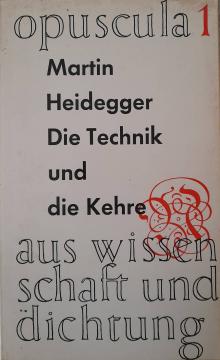
Die Technik und die Kehre
Rijetka knjiga

Die Technik und die Kehre

Martin Heidegger

Technique and the Turn is a collection of essays published in 1954, one of Heidegger's key works on the problem of technique. Heidegger analyzes the essence of technique and warns that modern technology is not just a set of means, but has a deep ontologic

According to Heidegger, technology in the modern age is no longer a neutral means to achieve goals. Its essence lies in the positing (Ge-stell), the way in which the world is revealed to man: nature, people and things are no longer experienced as existing in themselves, but as resources ready to be used and exploited.

This type of revelation is dangerous because it deceives man, making him an unconscious participant in a process that subordinates everything to control and efficiency. Man becomes a "resource among resources", loses a deeper relationship with Being and forgets his own existence.

However, Heidegger does not see technology only negatively. Its greatest danger also lies in the possibility of a turn (Kehre). If man becomes aware of the way in which technology reveals the world, he can open himself to a new, freer relationship with Being.

Heidegger calls for a thoughtful approach to technology – not a rejection of technology, but a reshaping of the relationship to it, so that we can once again experience the world as a miracle of revelation, and not just as a storehouse of resources.

Dimenzije
22 x 14 cm
Broj strana
47
Nakladnik
Pfullingen Neske Verlag, Stuttgart, 1962.
 
Latinica. Broširano.
Jezik: Njemački.

Jedan primjerak je u ponudi

Stanje:Korišteno, u vrlo dobrom stanju
Oštećenja / nepogodnosti:
  • Signature of previous owner
Dodano u košaricu!
 

Zanima Vas i neka druga knjiga? Možete pretražiti našu ponudu pomoću tražilice ili prelistati knjige po kategorijama.

Možda će Vas zanimati i ovi naslovi

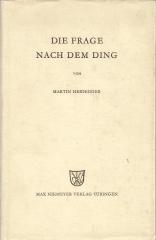
Die Frage nach dem Ding

Die Frage nach dem Ding

Martin Heidegger

The Question of Things, a collection of lectures given by Heidegger in 1935/36, deals with the fundamental philosophical question: What is a thing? His starting point is Kant's Critique of Pure Reason, but Heidegger goes further, wanting to clarify the ve

Max Niemeyer Verlag, 1975.
Njemački. Latinica. Tvrde korice s ovitkom.
24,99
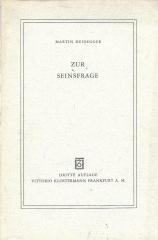
Zur Seinsfrage

Zur Seinsfrage

Martin Heidegger
Vitorio Klostermann, 1967.
Njemački. Latinica. Broširano.
14,99
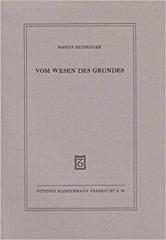
Vom Wesen des Grundes

Vom Wesen des Grundes

Martin Heidegger
Vitorio Klostermann, 1973.
Njemački. Latinica. Broširano.
14,99
Politički liberalizam

Politički liberalizam

John Rawls

John Rawls, the founder of modern liberalism, offers a roadmap for a stable society: "Political Liberalism," a sequel to the classic "A Theory of Justice," is not just a philosophical treatise, but a practical model for pluralistic societies like ours.

Kruzak, 2000.
Hrvatski. Latinica. Broširano.
32,56
Foucault

Foucault

Gilles Deleuze

Deleuze's Portrait of Foucault (1986) is not a monograph, but a creative "thinking with Foucault." It analyzes the archaeology of knowledge, introducing the concepts of archive, power, subjectification, and "fold" as crucial to Foucault's thought on knowl

Sandorf, 2023.
Hrvatski. Latinica. Broširano.
11,86