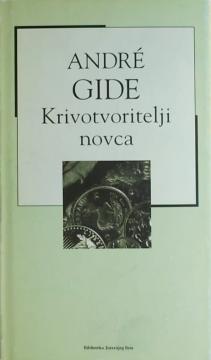
Krivotvoritelji novca

Krivotvoritelji novca

Andre Gide

„Die Fälscher“ (1925) ist ein intellektuell anspruchsvoller Roman, der für seine philosophische Tiefe und seinen Mut geschätzt wird. Geschrieben als experimenteller „Roman im Roman“, bricht Gide mit der traditionellen Erzählweise und bietet eine vielschic

Die Handlung folgt mehreren Jugendlichen und Erwachsenen, deren Leben miteinander verflochten sind. Bernard Profitendieu, ein rebellischer junger Mann, entdeckt, dass er nicht der Sohn seines Vaters ist, und verlässt sein Zuhause auf der Suche nach seiner eigenen Identität. Sein Freund Olivier Molinier hadert mit den Erwartungen seiner Familie und seiner Anziehung zu dem älteren Schriftsteller Édouard, der an einem gleichnamigen Roman, „Die Geldfälscher“, schreibt und so eine Metaerzählung schafft. Édouards Suche nach reiner Kunst spiegelt Gides eigenen Kampf mit der Kreativität wider, während Figuren wie Bernard und Olivier die Grenzen von Moral, Sexualität und Freiheit austesten.

Der Roman untersucht „Fälschung“ im metaphorischen Sinne – falsche Moral, gesellschaftliche Normen und künstlerische Kompromisse –, während die Figuren in einer Welt voller Täuschung um Authentizität ringen. Gide verwendet Tagebucheinträge, Briefe und Dialoge und schafft so eine fragmentarische Struktur, die das Chaos der Jugend und intellektuelle Bestrebungen widerspiegelt. Gides von Ironie und psychologischem Scharfsinn durchdrungener Stil macht es zu einem Schlüsselwerk der Moderne und lädt die Leser ein, über Wahrheit und Freiheit nachzudenken.

Original title
Les faux-monnayeurs
Translation
Dane Smičiklas
Dimensions
21 x 12.5 cm
Pages
350
Publisher
Jutarnji list, Zagreb, 2004.
 
Latin alphabet. Hardcover with dust jacket.
Language: Croatian.
ISBN
978-9-53716-017-3

Multiple copies are available

Copy number 1

Condition:Unused

Copy number 2

Condition:Used, excellent condition

Copy number 3

Condition:Used, excellent condition

Copy number 4

Condition:Unused
 

Are you interested in another book? You can search the offer using our search engine or browse books by category.

You may also be interested in these titles

Povratak razmetnoga sina; Močvare; Tezej

Povratak razmetnoga sina; Močvare; Tezej

Andre Gide
Otokar Keršovani, 1980.
Croatian. Latin alphabet. Hardcover with dust jacket.
42.36 (set)
Vatikanski podrumi

Vatikanski podrumi

Andre Gide
Otokar Keršovani, 1980.
Croatian. Latin alphabet. Hardcover.
42.36 (set)
Tri mušketira 1-2

Tri mušketira 1-2

Alexandre Dumas

Dumas' version of the story depicts the adventures of d'Artagnan and his friends from 1625 to 1628.

Epoha, 1966.
Croatian. Latin alphabet. Hardcover with dust jacket.
The book consists of two volumes
9.48
Crna kutija

Crna kutija

Amos Oz

The Black Box is a kaleidoscope of married life and love relationships. It is a novel that implicitly speaks about all of us.

Hena Com, 2001.
Croatian. Latin alphabet. Hardcover.
10.98
Zagrepčanka

Zagrepčanka

Branislav Glumac

Branislav Glumac published a novel without periods or commas in 1974, as the relentless stream of thought of a young rebel. Published in socialist Yugoslavia, the work caused a scandal with its openness and became a classic about generational rebellion.

IROS, 1986.
Croatian. Latin alphabet. Hardcover.
8.22 - 8.24
Ulazeći u Varcar

Ulazeći u Varcar

Ivan Lovrenović

The hybrid book – a novel, poem and essay in one – is a dedication to his native Varcar, a small village in central Bosnia, where the author's roots intertwine with the history, myth and chaos of the 20th century.

Fraktura, 2016.
Croatian. Latin alphabet. Hardcover with dust jacket.
14.4210.82