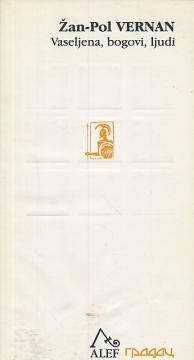
Vaseljena, bogovi, ljudi

Vaseljena, bogovi, ljudi

Jean-Pierre Vernant

Vernant first told the stories published in this book to his grandson, and then, in a more complex form, he told them to his friends on summer evenings on a Greek island.

The Universe, Gods, and People says that myths are the comprehensiveness of life. They preserve the secret of creation, the relationship of the gods to creation, and also the position of man in this world and the next. The path of Greek myths leads from the stories of nannies (as Plato put it) to the tragedies on the ancient stages. But this path continued to Shakespeare, Racine, and Corneille, so that we can meet them again in Freud's psychoanalysis, as well as in the everyday life and behavior of modern man: in murders, adulteries, and incest, in punishments and heroism, in the relationship of life to death, of this world to the afterlife, in man's wanderings through the ambushes and traps of life.

The life and the world summarized in these myths - Vernant wants to tell us - do not require us to bypass reality and modernity. On the contrary, he tells us, in fact, that reality and modernity in some separate form do not exist. The boy's need for his grandfather's story, as well as the friend's need for Vernant – the storyteller – to remind them of those famous ancient events, shows that today's desire for storytelling is necessary, that it awakens in every being a curiosity to find out what happened in those times, in illo tempore, when people and things took on forms that are slowly but surely being consumed today in the great speed and emptiness of life, in a time when the richness of language is being lost, as it too adapts to given circumstances. That is why we all know that losing a connection with those times is a loss of the ability to understand man and to accept the world.

Naslov originala
L'univers, les dieux, les hommes
Prevod
Aleksandra Mančić
Urednik
Branko Kukić
Naslovnica
Mile Grozdanić
Dimenzije
22 x 12 cm
Broj strana
156
Izdavač
Gradac, Čačak, 2002.
 
Latinica. Broširano s omotom.
Jezik: Srpski.

Jedan primerak je u ponudi

Stanje:Korišćeno, u vrlo dobrom stanju
Oštećenja / nepogodnosti:
  • Stains on cover
Dodato u korpu!
 

Zanima Vas i neka druga knjiga? Možete pretražiti našu ponudu pomoću pretrage ili prelistati knjige po kategorijama.

Možda će Vas zanimati i ovi naslovi

Lion Handbook of Christian Belief

Lion Handbook of Christian Belief

Lion Publishing, 1982.
Engleski. Latinica. Broširano.
7,26
Dječja Biblija: Najvažnija knjiga na svijetu - Biblija ispričana tako da je razumiju i djeca

Dječja Biblija: Najvažnija knjiga na svijetu - Biblija ispričana tako da je razumiju i djeca

Pat Alexander

Ova knjiga, Dječja Biblija, donosi sažetu povijest čovječanstva kako je zapisana u Bibliji.

Jutarnji list, 2004.
Hrvatski. Latinica. Broširano.
3,52 - 3,98
Svetice sablazni

Svetice sablazni

Erri de Luca

A book by Italian author Erri De Luca that explores the lives of five women from Jesus' genealogy mentioned at the beginning of Matthew's Gospel: Tamar, Rahab, Ruth, Bathsheba, and Mary.

Felsina, 2019.
Hrvatski. Latinica. Broširano.
8,32
Ilustrirana Biblija - Novi zavjet

Ilustrirana Biblija - Novi zavjet

Stories from the New Testament, from the birth of Jesus to his death and resurrection, as well as the journeys of the apostles, are told clearly and vividly.

Marjan tisak.
Hrvatski. Latinica. Broširano.
4,98
Zvijezde koje ne zalaze - Dvadeset velikana Crkve

Zvijezde koje ne zalaze - Dvadeset velikana Crkve

Yves (ivon Ćuk) Ivonides

The author compares the greats of the church's past with stars. The message he wants to convey with this collection of examples of saints and church fathers is useful and current.

Hrvatsko književno društvo Sv. Jeronima, 2002.
Hrvatski. Latinica. Broširano.
7,12
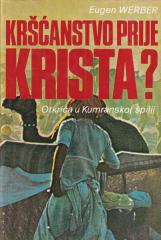
Kršćanstvo prije Krista?

Kršćanstvo prije Krista?

Eugen Werber

"Qumran writings" or "Dead Sea Scrolls" represent one of the greatest discoveries of the 20th century, which lead to the revision of some overly simplified atheistic understandings.

Liber, 1972.
Hrvatski. Latinica. Tvrde korice s omotom.
12,36