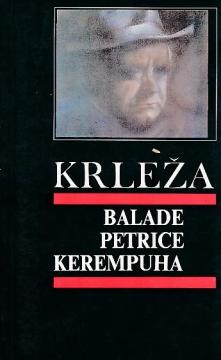
Balade Petrice Kerempuha

Balade Petrice Kerempuha

Miroslav Krleža

Miroslav Krleža's greatest poetic achievement and one of the most important works of Croatian literature. The ballads combine satire, irony, and lyrical-folkloric tones in a condemnation of violence and stupidity of government throughout the centuries.

In Ballads of Petrica Kerempuh, Miroslav Krleža creates a literary work that simultaneously acts as a historical lament, a political indictment, and a poetic fresco of the Croatian north. The main voice of the collection, the fictional Petrica Kerempuh, a folk sage and mocker, observes history “from below”: from the perspective of peasants, serfs, marginalized people, and all those over whom foreign rule has been imposed for centuries.

The collection covers a wide time span — from medieval rebellions and persecutions to the tragedies of the early modern era. Through kajkavština, a language full of rhythm, metaphors, proverbs, and ironic puns, Krleža brings to life the entire world of lost voices: victims of violence, hungry, ridiculed, deceived. Petrica moves through this landscape as a commentator, not submissive, but not naive either — his humor carries the bitterness of experience, and his irony exposes the cruelty of those in power.

In the background of the ballads, the horrors of history unfold: hangings, military campaigns, rebellions, epidemics, robberies and political persecutions. But in this darkness, Krleža also finds motives of resistance — the defiance of the peasant masses, the strength of unity, laughter as the last weapon of those who have no other. The collection thus becomes a chronicle of suffering, but also a testimony to the perseverance of a people who survive thanks to wit and unwavering hope.

Petrica, as a lyrical protagonist, embodies the combination of folk wisdom and literary mask. He sees everything: the emptiness of historical ideologies, the hypocrisy of the authorities, the repetition of tragedies. Krleža uses him to speak about centuries-old injustice, but also to show how the truth is often preserved in the language of mockers and jokes, and not in the speeches of rulers.

Urednik
Miroslav Prstojević
Ilustracije
Jure Labaš
Naslovnica
Hrvoje Malić
Dimenzije
19,5 x 12 cm
Broj strana
174
Izdavač
NIŠRO Oslobođenje, Sarajevo, 1988.
 
Latinica. Broširano.
Jezik: Hrvatski.
ISBN
8-63-190111-3

Nema primeraka u ponudi

Poslednji primerak je nedavno prodat.
 

Zanima Vas i neka druga knjiga? Možete pretražiti našu ponudu pomoću pretrage ili prelistati knjige po kategorijama.

Možda će Vas zanimati i ovi naslovi

Izabrane pjesme

Izabrane pjesme

Miroslav Krleža
Matica hrvatska, 1963.
Hrvatski. Latinica. Tvrde korice s omotom.
9,997,49
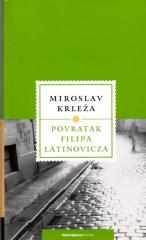
Povratak Filipa Latinovicza

Povratak Filipa Latinovicza

Miroslav Krleža

The Return of Filip Latinovicz is one of Miroslav Krleža's most famous novels. This novel is significant in our literature because it is considered the first fully modern Croatian novel.

Večernji list, 2004.
Hrvatski. Latinica. Tvrde korice s omotom.
5,52 - 5,56
Hrvatski bog Mars

Hrvatski bog Mars

Miroslav Krleža

The Croatian god Mars brings seven anti-war novels in which Krleža portrays war as a cruel, senseless machinery that destroys the "little man", exposing the hypocrisy of militarism and myths about heroism.

Rad, 1965.
Srpski. Latinica. Broširano.
1,99
Štihovi i smešna smeša

Štihovi i smešna smeša

Ogden Neš
BIGZ, 1977.
Srpski. Latinica. Broširano.
4,99
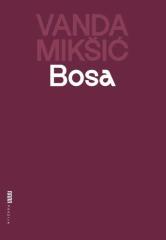
Bosa

Bosa

Vanda Mikšić

Fusions in search of fragments of identity, in a combination of verses and prose fragments, are at the forefront of this collection.

MeandarMedia, 2024.
Hrvatski. Latinica. Broširano s omotom.
14,7413,27
Romeo i Julija

Romeo i Julija

William Shakespeare

The tragedy Romeo and Juliet is one of the most famous works of the famous English writer William Shakespeare and one of the most famous love tragedies in general.

Matica hrvatska, 1950.
Hrvatski. Latinica. Tvrde korice.
6,72